
If you are researching options to redefine your complete silhouette, not just the abdomen or flanks separately, you have likely come across the term 360 liposuction. It is one of the body contouring procedures that has grown the most in recent years, and not because of a trend: it already represents 35% of all liposuctions performed in Colombia. But with so much conflicting information on social media and forums, it is hard to separate what it really includes from what it does not.
Soy el Dr. Jaime Aroca, cirujano plástico certificado en Barranquilla, y quiero explicarte con claridad qué abarca una lipo 360, en qué se diferencia de la liposucción convencional, qué tecnología usamos para obtener resultados más precisos y, sobre todo, cómo saber si eres candidata. No te voy a vender fantasías: voy a darte la información que necesitas para tomar una decisión informada.
Key Points
- 360 liposuction treats the complete circumference of the torso (abdomen, flanks, and back) in a single procedure, avoiding abrupt transitions between treated and untreated areas.
- Unlike traditional liposuction, lipo 360 sculpts the body contour comprehensively and can include abdominal etching for an athletic and natural result.
- Advanced technologies such as diode laser, ultrasonic vibration, and vibrolipolysis significantly reduce surgical trauma, accelerating recovery and decreasing complications such as seroma.
- The ideal candidate for 360 liposuction has a BMI under 30, skin with good elasticity, localized fat resistant to diet and exercise, and does not present significant abdominal diastasis.
- The final results of lipo 360 consolidate between 3 and 6 months afterwards, and maintaining them requires discipline with a balanced diet and regular exercise.
- 360 liposuction is not a method for weight loss nor does it eliminate cellulite; each surgical plan must be designed in a personalized manner after an individual evaluation.
What Is 360 Liposuction?
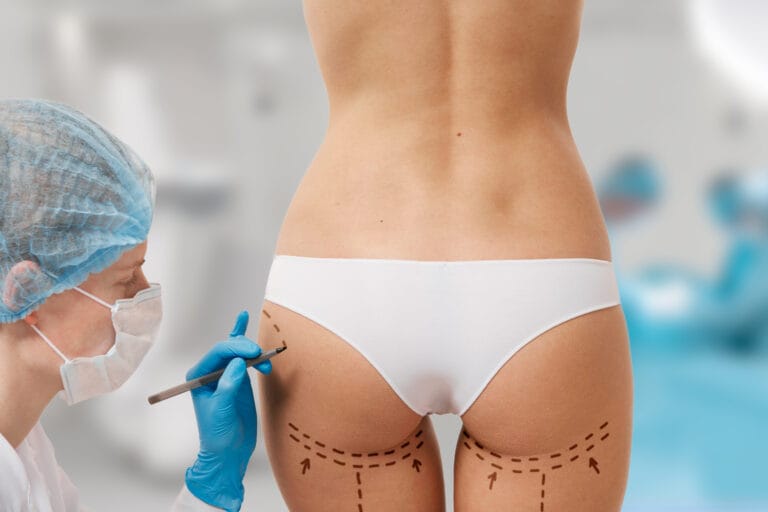
360 liposuction, also called circumferential liposuction, is an advanced liposculpture procedure that treats the complete circumference of the torso in a single procedure. Unlike liposuction focused on a specific area, here the goal is to work the entire contour: front, sides, and back, as if wrapping a tape measure around the body.
The concept is simple to understand: when you extract fat only from the abdomen but leave the flanks or lower back intact, abrupt transitions are created between treated and untreated areas. The result can look disproportionate. Lipo 360 solves this by addressing the body as a unit, achieving a proportioned and harmonious contour from any angle.
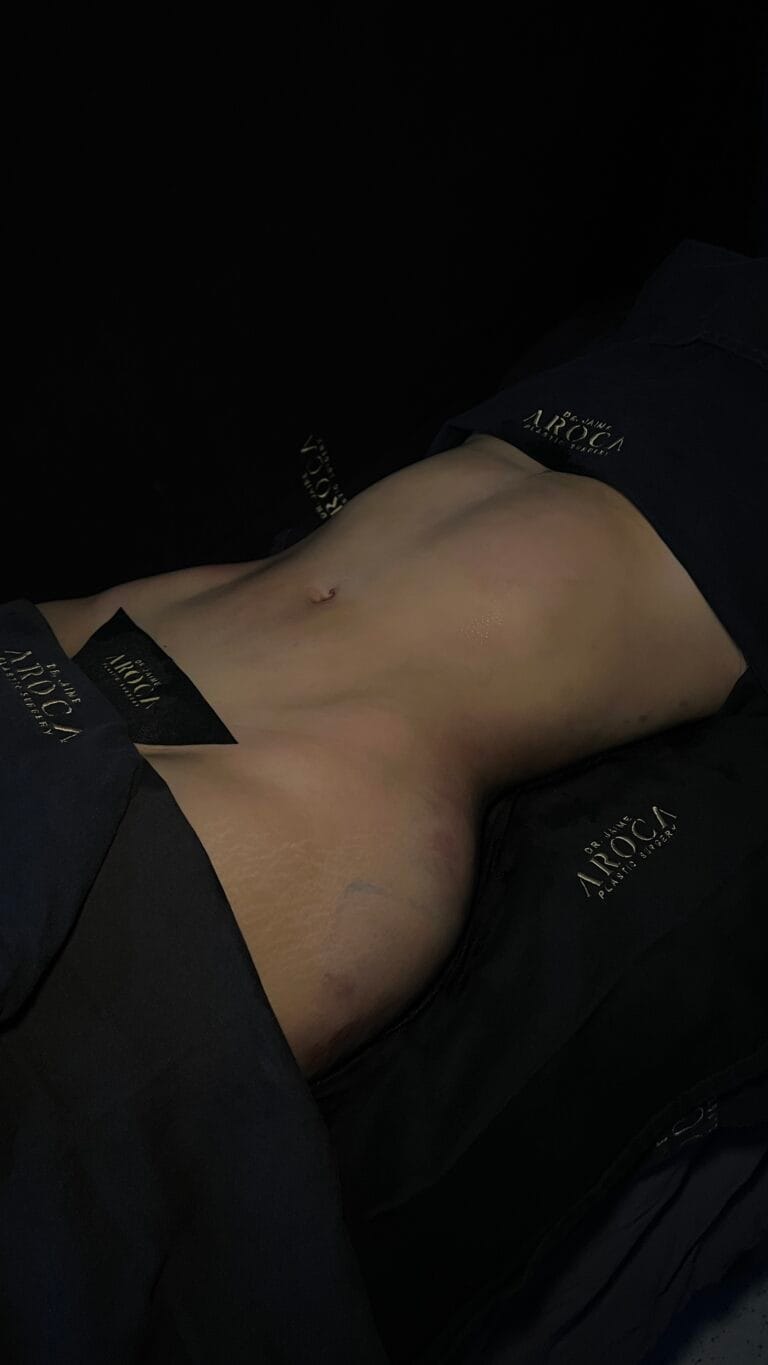
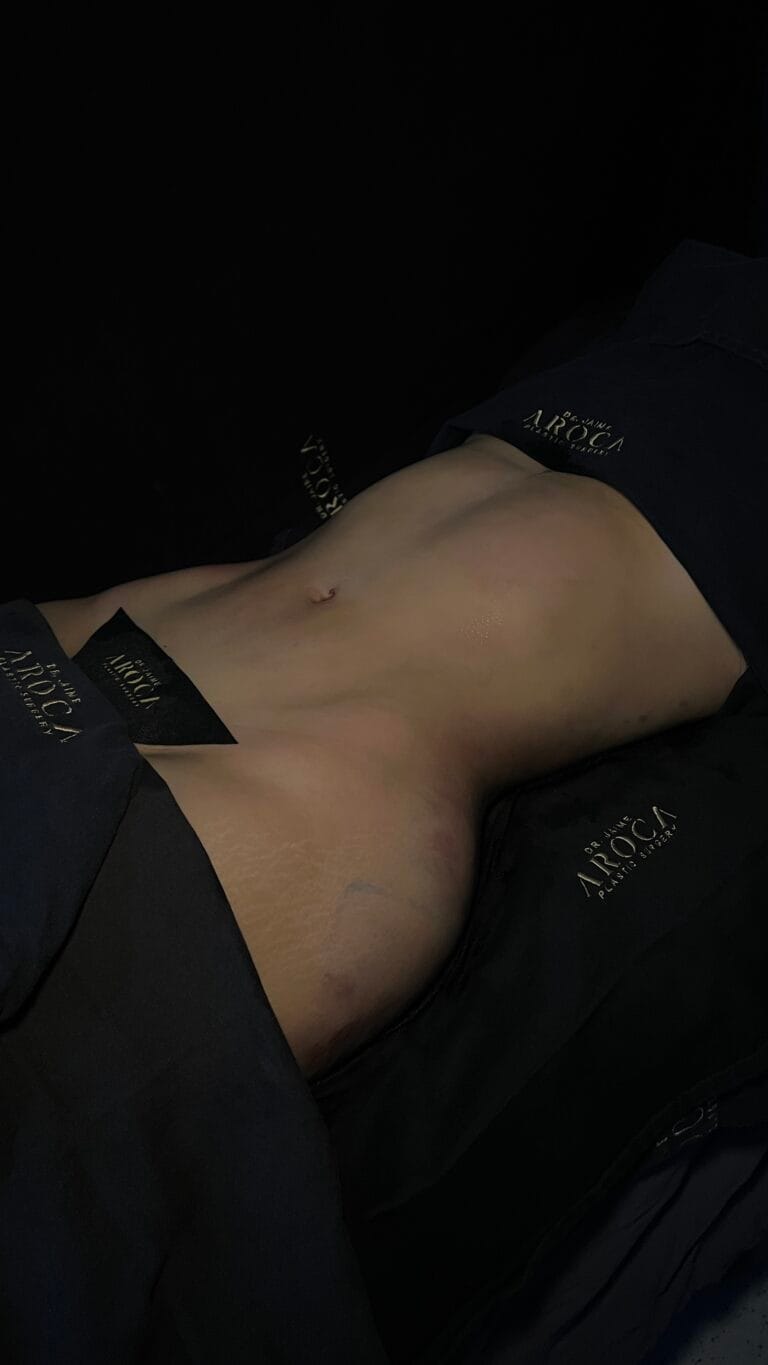
In my practice, this surgery goes beyond traditional liposuction. My ArDef Contour technique fulfills exactly that circumferential approach, but adds a step that makes the difference: we do not just extract fat, we sculpt. We work on the muscular definition of the abdomen, what many know as abdominal etching, to achieve an athletic and natural look, not simply “emptying” an area.
What Areas Are Treated in a Lipo 360?
The standard protocol for 360 liposuction covers six main areas:
- Upper and lower abdomen
- Right and left flanks (what we commonly call “love handles”)
- Upper back and lower back
But in clinical practice, many patients benefit from an extended approach. In ArDef Contour, for example, I work comprehensively:
- Waist: noticeable reduction to create real proportion.
- Hips: strategic projection to create curves.
- Buttocks: optional fat transfer with your own fat, to clearly differentiate where the back ends and where the buttocks begin.
- Arms: refinement as part of the comprehensive procedure.
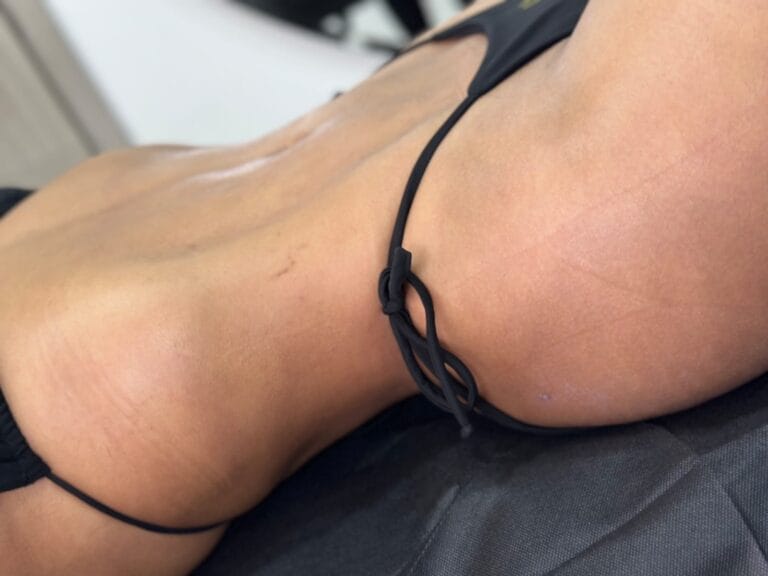
This circumferential treatment is precisely what avoids those visible “transitions” that reveal a poorly planned liposuction. The result I seek, what my team calls the “Aroca Effect” or the “Latin mermaid body”, is an athletic abdomen, reduced waist, and hip projection in a single procedure.
360 Liposuction vs Traditional Liposuction
The confusion between both procedures is very common, so I will be direct:
Traditional liposuction 360 Liposuction
Areas A single area (e.g. abdomen) Complete circumference of the torso
Goal Flatten or reduce isolated deposits Sculpt the comprehensive contour
Result Localized improvement Proportion and harmony from all angles
Muscle definition Generally not included Can include abdominal etching
Traditional liposuction seeks, in essence, to flatten or empty the fat from a specific area. It is useful when the problem is very localized. But when a patient wants to redefine her complete silhouette, waist, back, abdomen, hips, treating isolated areas generates incomplete results.
Lipo 360 treats the body as a unit. And in my case, with ArDef Contour, I do not just extract: I sculpt the abdomen to achieve a defined and athletic look. That is an important technical difference that requires a lot of skill and experience from the surgeon. A poorly done etching can look like a scar, not muscle definition.
Advanced Technology for Better Results
A well-executed lipo 360 depends on two things: the surgeon’s criteria and the technology used. Advanced techniques, ultrasound, vibration, laser, have been shown to significantly reduce complications compared to conventional liposuction. According to clinical literature, the seroma rate (fluid accumulation), which can reach 23.6% with traditional technique, drops to 3% with fascia preservation techniques and technological assistance.
But technology is a tool, not a replacement for surgical judgment. Poorly used, it can produce skin burns or contour irregularities.
Plataforma Arotech del Dr. Jaime Aroca
In my practice, the technological core is the Arotech platform, which integrates multiple systems in a single approach:
- Diode laser: for precise extraction and muscle etching with minimal incisions.
- Ultrasonic vibration: for efficient extraction with less tissue trauma.
- Micro air: controlled air blasts that decrease tissue trauma.
- Vibrolipolysis (Liposurg Nouvag): destroys fat cells before extracting them, achieving a procedure I describe as “totally atraumatic.”
The practical result for the patient is a faster and less painful recovery, with less damage to internal tissues. According to reference information from recognized medical sources, advanced liposuction techniques, including ultrasound and vibration, are associated with less postoperative inflammation and more uniform results.
Who Is an Ideal Candidate for Lipo 360?
I do not operate on just anyone. And this point is important: 360 liposuction is not a weight loss procedure. It is a body contouring surgery for people who already have a relatively stable weight but have localized fat that does not respond to diet or exercise.
The criteria I evaluate in consultation include:
- Localized adiposity: resistant fat deposits in the abdomen, flanks, back, or hips.
- Skin with acceptable tone: without extreme laxity or excess stretch marks. If the skin does not have good elasticity, post-extraction skin retraction will not be adequate and another approach may be required.
- Rectus abdominis muscles in optimal condition: without separation (diastasis) or severe weakening from multiple pregnancies. When there is significant diastasis, the indicated procedure is usually an abdominoplasty.
- Adipose panniculus less than 4 centimeters thick: for abdominal etching candidates, subcutaneous fat thickness should not exceed that limit.
- BMI ideally under 30 kg/m²: according to clinical literature, this range optimizes results and reduces risks.
- Good overall health, non-smokers, with realistic expectations.
If you smoke, I cannot operate on you. If your expectation is that lipo 360 will resolve obesity or severe laxity, that is not the path either. That is why individual evaluation is the step where we define candidacy, risks, and the real plan.
Recovery and Expected Results
Recovery is a topic that generates a lot of anxiety, and I understand. But when technology reduces surgical trauma, the postoperative period changes substantially.
In general terms, this is what you can expect after 360 liposuction:
- Week 1: Maximum swelling, moderate pain controllable with medication. 24-hour use of compression garment.
- Weeks 2 to 3: Notable improvement in swelling. Possible return to desk work.
- Weeks 4 to 6: Daytime garment use, light exercise authorized based on progress.
- Compression garment: generally 4 to 6 weeks of continuous use, per protocol.
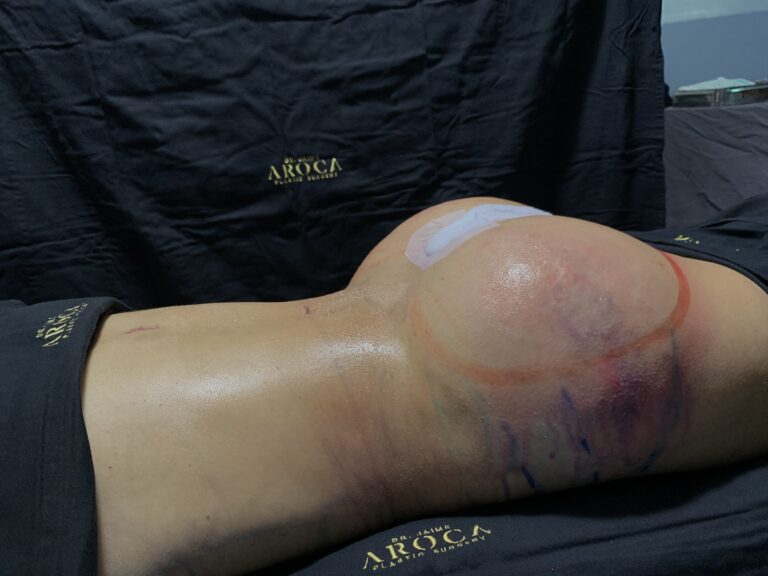
Initial results begin to show between the first and second week, but final results consolidate between 3 and 6 months. Patience here is not optional.
And there is something I repeat in every consultation: surgery gives a boost, but maintaining the results depends on you. A balanced diet and regular exercise are not suggestions, they are mandatory. Without subsequent discipline, no liposculpture sustains its results long-term.
Regarding volumes, clinical literature establishes up to 5 liters of total aspirate (fat plus tumescent fluid) as safe in an outpatient procedure. When that volume is exceeded, hospitalization and monitoring are required. Any procedure carries risks, plastic surgery should not be taken lightly, and that is precisely the reason why each surgical plan is designed in a personalized manner.
Frequently Asked Questions
Does 360 liposuction eliminate cellulite?
No. La lipo 360 extrae grasa subcutánea, pero la celulitis tiene un componente estructural de la piel (tabiques fibrosos) que requiere otro tipo de tratamiento. No te voy a vender fantasías: si la celulitis es tu principal preocupación, existen procedimientos específicos como la subcisión o la radiofrecuencia que se enfocan en ese problema.
How long does the surgery take?
Depending on the extent of the procedure and the areas included, a lipo 360 can last between 2 and 4 hours. The exact time depends on each patient’s surgical plan.
How much does a lipo 360 cost?
I do not handle standardized prices. Every body is different, every plan is distinct. What I do offer is a personalized pre-evaluation where we define scope, areas, technique, and real budget.
Can it be combined with other procedures?
Yes. It is common to combine lipo 360 with fat transfer to the buttocks (commonly known as BBL) or to the breasts. In some cases, when there is significant skin laxity or abdominal diastasis, the indicated procedure may be an abdominoplasty instead of, or complementary to, liposculpture.
Are the results permanent?
The extracted fat cells do not return. But if you gain weight significantly after surgery, the remaining cells can expand. Maintenance with diet and exercise is essential.
If you have more questions or want to know if you are a candidate, the next step is to schedule an evaluation. There we assess your case comprehensively, skin, fat, musculature, medical history, and together we define a plan that makes sense for you.