
If you are reading this, you have probably spent weeks, or months, searching for information about abdominoplasty. And you have likely found contradictory information, dramatic before-and-after photos without context, and promises that sound too good to be true.
I am Dr. Jaime Aroca, plastic surgeon, and I have spent more than 15 years dedicated to body surgery in Barranquilla, Colombia. In this article, I am going to explain honestly what you can expect from an abdominoplasty: what it is, what it corrects, who is a candidate, how recovery works, and what results you can realistically obtain.
Key Points
- Abdominoplasty in Colombia not only removes excess skin and fat, but reconstructs the abdominal wall, repairing diastasis and hernias for a functional and aesthetic result.
- There are two main variants, complete abdominoplasty and mini abdominoplasty, and the choice depends on the degree of laxity, excess skin, and muscular state of each patient.
- Ideal candidates have completed their family planning, maintain a stable weight for at least 6 months, do not smoke, and have realistic expectations about the results.
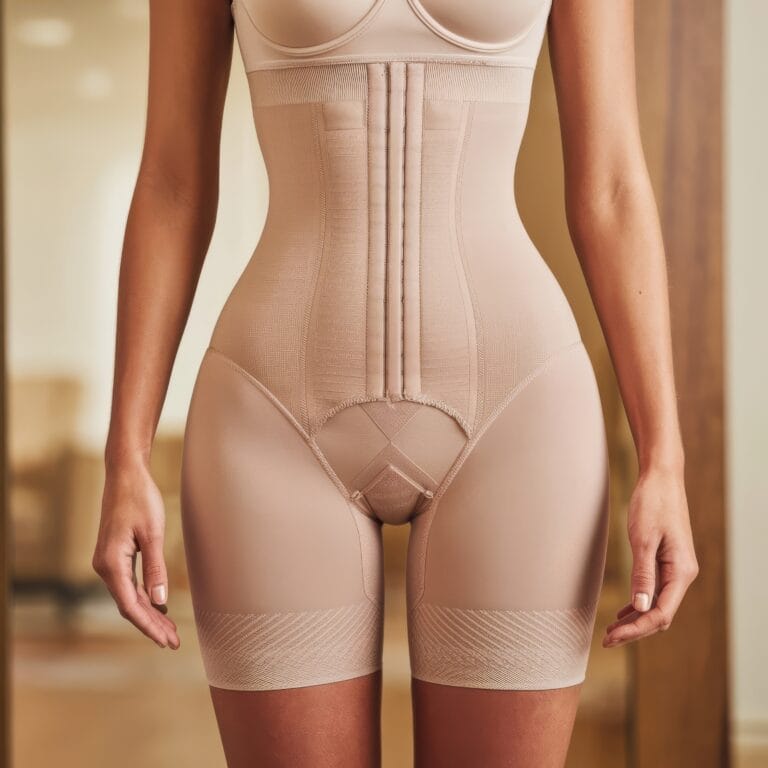
- Recovery from abdominoplasty requires absolute rest the first 10 days, continuous use of a compression garment for 4-6 weeks, and gradual return to activities according to medical authorization.
- My exclusive ArTummyTech technique integrates muscle repair, excess skin removal, navel reconstruction, and complementary liposculpture in a single surgical time.
- The definitive result is visible between 6 and 12 months after surgery, and maintaining it requires a healthy lifestyle with balanced diet and regular exercise.
What Is an Abdominoplasty?
An abdominoplasty, commonly known as a tummy tuck, is a surgical procedure that removes excess skin and fat from the abdomen, repairs the abdominal wall muscles, and repositions the navel to restore a flat, toned, and proportioned contour.
It is not just a cosmetic surgery. In many patients, especially women after pregnancies, the abdominoplasty has a functional component: it repairs the diastasis recti (separation of the abdominal muscles) that causes the abdomen to look bulging even when the patient is thin. It can also correct umbilical or ventral hernias in the same surgical time.
In my practice, I have developed the ArTummyTech technique, which integrates all of this in a single procedure: I repair the muscle wall, remove excess skin, reconstruct the navel, and complement with liposculpture to define the waist and flanks. The goal is not just a flat abdomen, but one that is proportioned and in harmony with the rest of the body.
Types of Abdominoplasty
Not all abdominoplasties are the same. The type of procedure depends on the degree of laxity, the amount of excess skin, and the state of the abdominal wall musculature.
Complete Abdominoplasty
This is the most common procedure. It addresses the entire abdomen, from below the bust to the pubis. It includes complete plication of the rectus abdominis muscles, resection of the skin flap, and navel repositioning. It is indicated when there is significant excess skin, marked diastasis, and the patient wants a comprehensive result.
Mini Abdominoplasty
The mini abdominoplasty focuses on the lower abdomen, below the navel. It involves a shorter incision and does not require navel repositioning. It is ideal for patients with moderate laxity limited to the lower area, without significant diastasis.
The choice between one and the other is not cosmetic: it is clinical. During the evaluation, I determine which variant best fits each patient’s anatomy and needs.
Complete Abdominoplasty vs Mini Abdominoplasty
Aspect Complete Abdominoplasty Mini Abdominoplasty
Area treated Entire abdomen (above and below navel) Lower abdomen only
Navel Repositioned Not repositioned
Incision Longer (hip to hip) Shorter (lower abdomen)
Diastasis repair Complete (full length) Partial or none
Recovery 4-6 weeks 2-4 weeks
Indication Significant excess skin, marked diastasis Moderate laxity in lower abdomen
Who Is a Candidate for Abdominoplasty?
Not every person who wants a flat abdomen is a candidate for abdominoplasty. And being clear about this is part of my responsibility.
The general criteria for candidacy include:
- Completed family planning. If you plan to have more children, it is better to wait. A pregnancy after abdominoplasty can reverse the results.
- Stable weight for at least 6 months. The procedure is not a weight loss method: it is a body contouring surgery for patients who are already close to their ideal weight.
- Good overall health. No uncontrolled medical conditions that increase surgical risk.
Non-smoker. Tobacco compromises circulation and healing. In my practice, I do not operate on patients who smoke.
Realistic expectations. Understanding what the procedure can and cannot achieve is fundamental.
Patients who benefit the most from abdominoplasty include:
Women after pregnancies with diastasis, excess skin, and fat that does not respond to exercise.
- People after significant weight loss with a skin flap that does not retract.
- Men and women with moderate abdominal laxity and localized fat.
- The Pre-Surgical Process
- Preparation for an abdominoplasty begins weeks before the procedure. In my practice, the process includes:
Comprehensive in-person evaluation: I assess skin quality, degree of diastasis, amount of fat, presence of hernias, and overall body structure.
Pre-surgical exams: complete blood count, coagulation profile, blood chemistry, pregnancy test, and cardiac evaluation if indicated.
Pre-anesthetic consultation: mandatory 30 to 45 days before surgery.
Physical preparation: nutrition, medication suspension, and quitting smoking (minimum 4-6 weeks before).
For international patients, the process begins with a virtual consultation and we coordinate exams in their country of origin.
What Happens During Surgery?
The abdominoplasty is performed under general anesthesia and has a typical duration of 2 to 4 hours, depending on the complexity.
The main steps are:
Incision: it is made in the lower abdomen, in the bikini line, from hip to hip. The length depends on the amount of skin to be removed.
Skin detachment: the skin flap is separated from the muscle plane to access the abdominal wall.
Muscle repair: the rectus abdominis muscles are plicated (brought together), correcting diastasis. If there are hernias, they are repaired at this time.
- Skin resection: excess skin is removed and the remaining skin is tensed over the new contour.
- Navel repositioning: in a complete abdominoplasty, the navel is brought through a new opening in the tensed skin and sutured with careful technique.
- Complementary liposculpture: in my practice, I add liposculpture of the flanks and waist to improve the overall contour.
- Closure and garment: the incision is sutured in layers and the compression garment is placed immediately.
- Recovery After Abdominoplasty
Recovery is a process that requires discipline and patience. This is the general timeline:
First 10 Days
Absolute rest. You will not be able to stand fully upright. Walking with a slight forward lean is normal. Compression garment 24 hours a day. Drains (if used) are usually removed between days 7 and 10.
Weeks 2 to 4
Gradual resumption of light activities. You can start walking more. The garment continues. Bruising and swelling decrease noticeably.
Weeks 4 to 8
Return to moderate activities. Exercise begins to be authorized gradually. The garment transitions to stage 2 (lighter compression).
Definitive Result
The final result is visible between 6 and 12 months. That is the time it takes for complete resolution of inflammation, scar maturation, and final skin retraction.
The scar remains in the bikini line and, with proper care (sun protection, silicone, hydration), becomes a thin, discreet line over time.
Risks and How They Are Managed
Like any surgery, abdominoplasty carries risks. Being transparent about them is part of my commitment to the patient:
Seroma: fluid accumulation under the skin. Prevented with drains, garment, and rest.
Infection: rare with proper aseptic technique and postoperative protocol.
Hematoma: blood accumulation. Managed with observation or drainage if necessary.
Wound dehiscence: partial opening of the incision. Managed with local care.
Skin necrosis: rare. Risk factors: smoking, diabetes, high BMI.
Deep vein thrombosis: prevented with compression stockings, early mobilization, and anticoagulant prophylaxis when indicated.
Risk factors that increase complications are well documented: smoking, obesity, diabetes, and previous abdominal surgeries.
Abdominoplasty in Colombia: Why Barranquilla
Colombia is one of the world’s leading destinations for plastic surgery, and Barranquilla has positioned itself as a city with high-quality medical infrastructure, trained surgeons, and competitive costs.
In my practice, I receive patients from the United States, Europe, Chile, and other Latin American countries. We coordinate comprehensive logistics: virtual consultations, pre-surgical exams in the country of origin, accommodation in Barranquilla, and postoperative follow-up.
Frequently Asked Questions About Abdominoplasty in Colombia
What is an abdominoplasty and what does it correct?
It is a surgical procedure that removes excess skin and fat from the abdomen, repairs separated muscles (diastasis), and repositions the navel. It can also correct umbilical hernias. The result is a flat, toned, and proportioned abdomen.
Does the abdominoplasty scar show a lot?
The incision is made in the lower abdomen, within the bikini area, so it is hidden under underwear and swimwear. With proper care, the scar becomes a thin, discreet line over time.
What risks does an abdominoplasty have and how are they minimized?