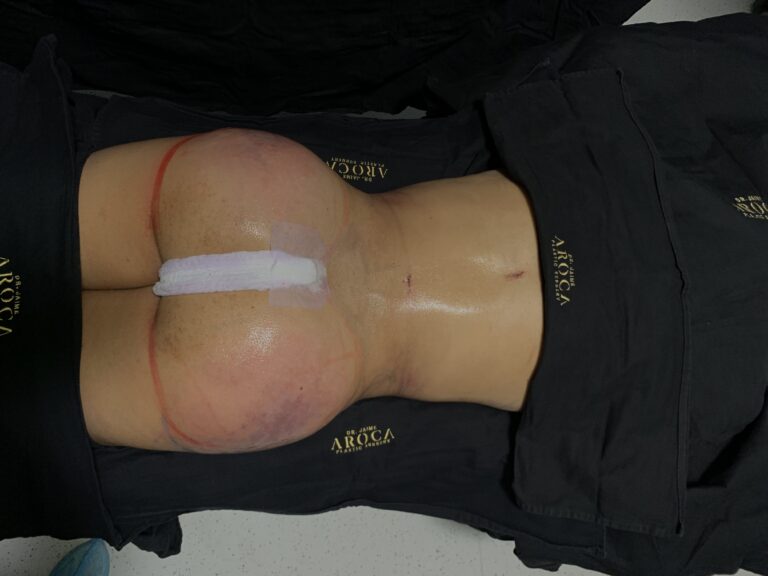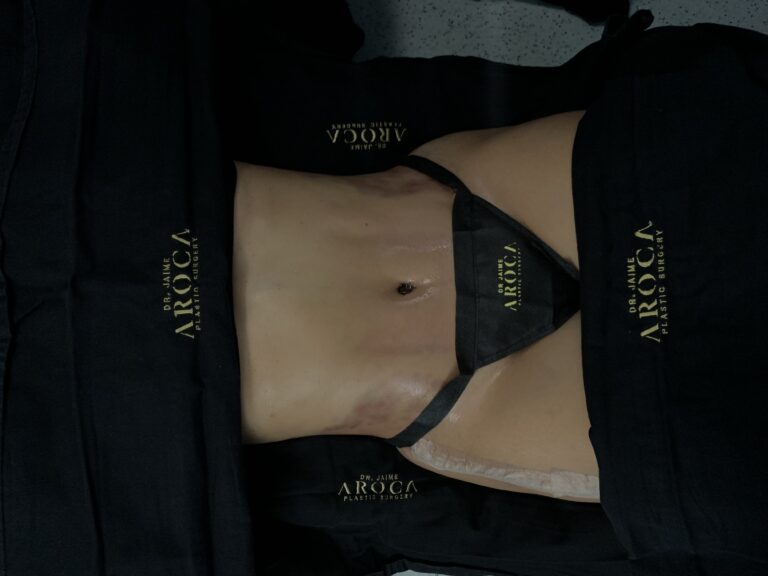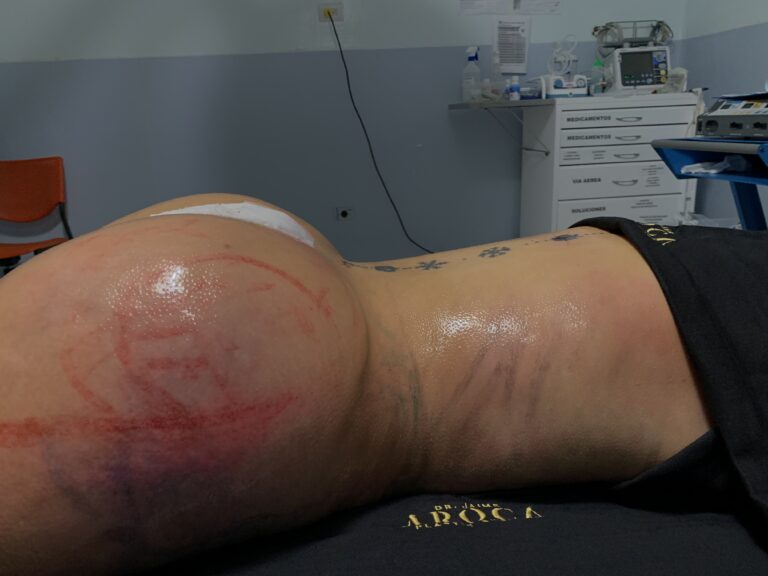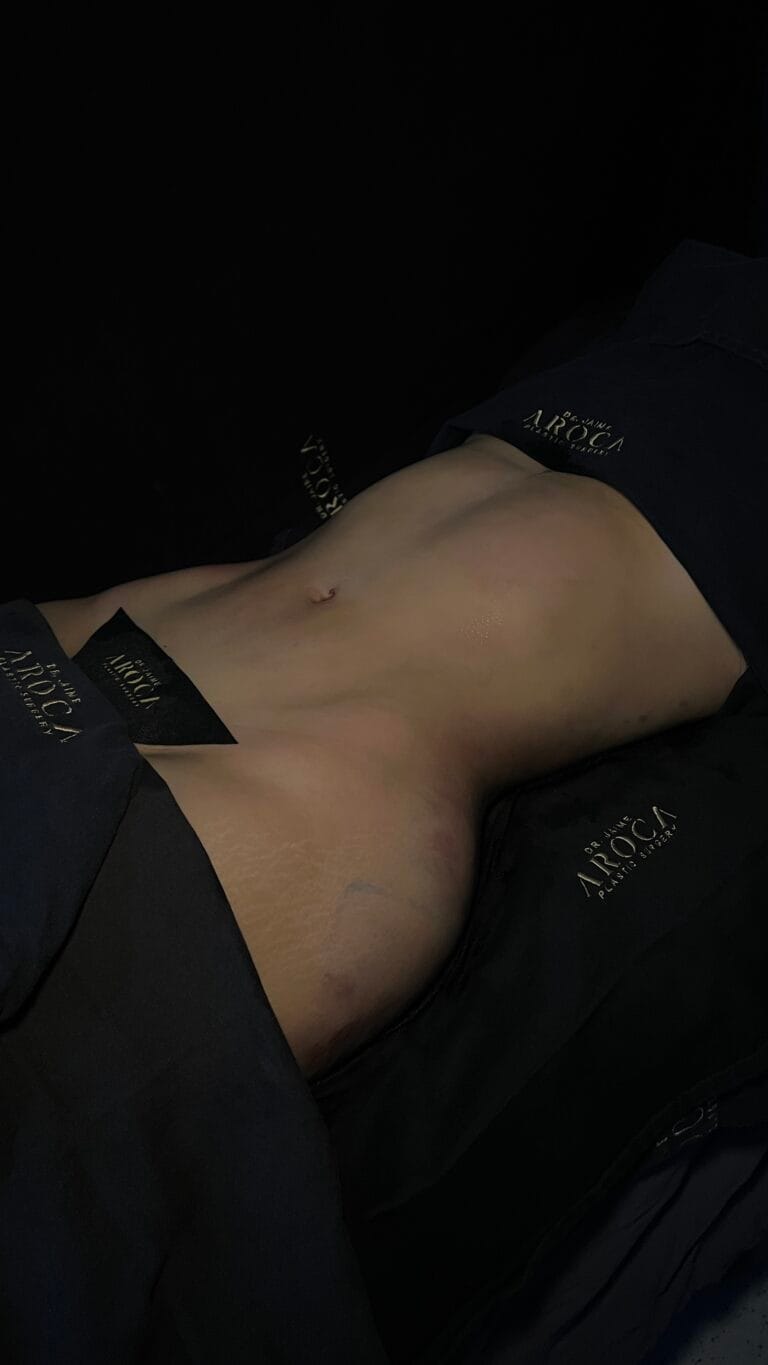

One of the questions I hear most in consultations is direct and honest: “Doctor, I am thin and I have little fat. Can I still have a BBL?” The short answer is: it depends. And the long answer is what I want to explain in this article.
What Is a BBL and Why Does Fat Matter?
The BBL, Brazilian Butt Lift or gluteal fat transfer, is a procedure in which fat is extracted from areas where it is in excess through liposuction, purified, and then strategically injected into the buttocks to increase volume, improve shape, and create proportioned curves.
Now, here is the key point: the raw material for this procedure is your own fat. Without enough donor fat, there is nothing to transfer. And that is where the main challenge lies for thin patients.
For that reason, when we talk about gluteal fat transfer and how it works, the assessment of available fat is the first filter. You can learn more about the procedure in our complete guide on what gluteal fat transfer is and how it works.
Is It Possible to Have a BBL If I Am Thin?
Yes, it is possible. But with important nuances that they are not going to tell you in a 30-second reel.
The viability of a BBL in thin patients is not decided by the number on the scale or the BMI alone. What really matters is the distribution of your body fat: where it is located, how much there is in each donor area, and the quality of that fat.
In my practice, I frequently see thin women, many of them athletes or mothers who recovered their pre-pregnancy figure, who still have palpable fat deposits in the abdomen, flanks, lower back, or inner thighs. Those patients can be excellent candidates for what is known as Skinny BBL.
In fact, something I explain a lot in consultations is that in thin postpartum women, the BBL can be combined with an abdominoplasty within a mommy makeover, treating several concerns in a single surgical time.
According to available medical literature from sources like WebMD, a minimum of approximately 500 cc of fat per buttock is needed to achieve a visible result. In thin patients, we work with tighter volumes but with meticulous technique that maximizes every cubic centimeter.
Skinny BBL: How It Works in Patients with Little Fat
The term “Skinny BBL” has become popular to describe gluteal fat transfer in patients with a low body fat percentage. It is not a different procedure: it is the same BBL, but adapted to a body with less donor fat available.
In a conventional BBL, I can transfer 1,000 cc or more per side. In a Skinny BBL, the volume usually ranges between 500 and 800 cc per buttock. The goal is not to create dramatic volume, but to improve proportion, define the gluteal contour, and create a harmonious waist-hip transition.
The technical key lies in two aspects: extracting with precision from areas that normally would not be considered in patients with more fat, and injecting with a technique that maximizes fat survival in the subcutaneous plane.
You can learn more about the BBL procedure and fat transfer to understand when BBL results are visible and how they evolve.
Donor Areas in Thin Women
When fat is not abundant, every cubic centimeter counts. In thin patients, the usual donor areas include:
- Lower abdomen: usually the area with the greatest deposit, even in slender women.
- Flanks (“love handles”): extraction that also defines the waist, improving the waist-hip proportion.
- Lower back: good quality fat and accessible.
- Inner and outer thighs: fat with soft texture, ideal for transfer.
- Arms: complementary area in patients with low body fat percentage.
In these cases, I use thin 3 mm cannulas that allow meticulous extraction without damaging the surrounding tissue. Each zone is worked carefully to obtain the maximum volume possible without compromising the aesthetic result of the donor area.
Realistic Volume Expectations
This is the point where I need to be completely transparent. I am not going to sell you fantasies.
If you are thin, the BBL can give you a visible, proportional, and beautiful improvement. But it will not give you the buttocks of someone who has abundant fat and a completely different body structure. The result is subtle, elegant, and natural. Not dramatic.
Some surgeons recommend their thin patients gain between 2 and 5 kg before surgery to increase the fat reserve. It is an option that I evaluate case by case, but I never force it. If I do recommend it, it is with a specific nutritional plan and under supervision.
What I can tell you is that patients who arrive with realistic expectations are the most satisfied with their results. The goal is to improve YOUR body, not transform it into someone else’s.
Alternatives to BBL for Thin Patients
And what if you really do not have enough fat for a fat transfer? It does not mean you have no options. There are alternatives that we evaluate in the consultation:
Silicone Gluteal Implants
For very thin patients where available fat is not enough for a satisfactory result, gluteal implants can provide volume and projection. They have a different complication profile than BBL, so the decision must be made with full information.
Mixed Technique (Implants + Fat)
This is an option I find particularly interesting for certain profiles. It combines the structure of an implant with the natural touch of autologous fat in specific areas. It is not common, but in the right hands, it can offer a very balanced result.
Non-Surgical Options
There are alternatives such as hyaluronic acid (like Sculptra or Radiesse) that stimulate collagen production and can subtly increase gluteal volume without surgery. They do not replace a BBL, but for patients who are not surgical candidates or prefer a less invasive approach, they can be a starting point.
A technology called AlloClae (2024-2025) has also recently emerged, which uses processed donor tissue to augment buttock volume without needing the patient’s own fat. It is still in early stages but shows promise as an alternative for thin patients.
Each alternative has its indications, advantages, and limitations. The decision always depends on what the individual evaluation reveals.
The Importance of Choosing an Experienced Surgeon
A BBL in thin patients is not the same procedure as in a patient with abundant fat. It requires a different level of precision, a more conservative approach, and a clear vision of what can be achieved with the material available.
The surgeon must master low-volume extraction techniques, know the safe injection planes, and have the aesthetic criterion to create a natural result with limited fat.
What should you look for?
- Board certification in plastic surgery: it seems obvious, but it is not. Verify that they are a specialist certified by the corresponding board.
- Documented experience with thin patients: ask to see previous cases with similar anatomies to yours.
- Rigorous safety protocol: accredited hospital, general anesthesia with continuous monitoring, and availability for postoperative follow-up.
- Honesty about what can and cannot be achieved: a good surgeon tells you that they cannot do something before doing it poorly.
In my practice, I do not operate on just anyone. If after the evaluation I determine there is not enough fat for a safe and aesthetically satisfying result, I say so. And we explore alternatives together.
How to Know If You Are a Candidate
The only certain way to know is through an in-person or telemedicine evaluation. But there are general criteria that can guide your initial research:
You might be a candidate for a Skinny BBL if:
- Your BMI is between 18 and 24.
- You have palpable fat in at least 2 or 3 donor areas (abdomen, flanks, thighs, back).
- Your goal is to improve waist-hip proportion, not obtain extreme volume.
- You are in good overall health and do not smoke.
- You have realistic expectations about a subtle and natural result.
A BBL might not be the best option if:
- Your body fat percentage is very low and there are no viable donor areas.
- You expect a dramatic volume change.
- You have health conditions that increase surgical risk.
Remember: the fat of active people in good physical condition can have better vascularization and higher survival after transfer. Being thin is not automatically a disqualification.
Individual evaluation is where candidacy, surgical plan, and realistic expectations are defined.
Frequently Asked Questions
Am I too thin for a BBL?
Not necessarily. The decision depends on your specific anatomy: amount of available donor fat, body composition, and your goals. An in-person evaluation is the only reliable way to determine it.
How much volume can I expect if I am thin?
In a Skinny BBL, the typical range is 500 to 800 cc per buttock, with a focus on proportion and natural shape rather than dramatic volume.
Should I gain weight before the BBL?
Some surgeons recommend gaining between 2 and 5 kg to increase fat reserve. Not all patients need it, and the decision depends on what the pre-surgical evaluation reveals.
How should I sit after the BBL?
During the first weeks, it is recommended to use a BBL pillow that redistributes pressure to the thighs, avoiding direct compression on the treated area.
Does the transferred fat stay?
Fat survival ranges between 60% and 80% of the injected volume. What survives the first 3 months is considered permanent, as long as a stable weight is maintained.
What happens if I do not have enough fat for BBL?
There are alternatives such as gluteal implants, mixed technique, or even non-surgical options like biostimulatory fillers. Each option is evaluated in the individual consultation.
If you are considering a BBL and have doubts about whether your body has enough fat, the most honest and reliable answer is always in the in-person consultation.