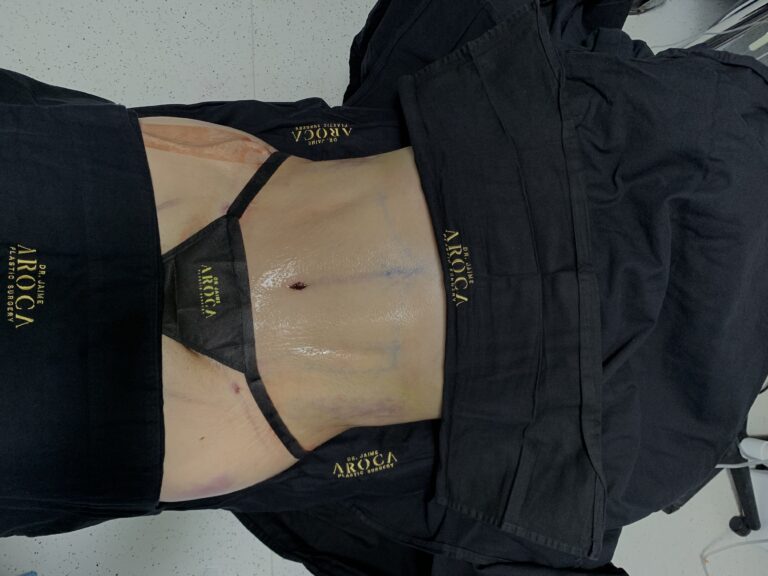

You lost 30, 40, or more kilos. You dieted, had surgery, changed your habits, and achieved something enormous. But when you look in the mirror, your abdomen does not reflect that effort. There is skin that hangs, folds that show through any clothing, and a feeling that your body has not fully caught up with your transformation.
This is a situation I see frequently in my practice: patients who did everything right, who lost a significant amount of weight, and who arrive frustrated because exercise and diet cannot resolve what remains. And they are right. There comes a point where the skin, muscles, and tissues no longer respond on their own. That is where a tummy tuck after major weight loss comes in as a real solution—not magical, but effective when properly planned.
Key Points
Why Weight Loss Is Not Enough for a Flat Abdomen
Losing weight is an enormous achievement. But the body has biological limits that no diet or exercise routine can overcome. Understanding those limits is the first step toward making an informed decision.
What Happens to the Skin After Major Weight Loss
When a person lives with obesity for years, the skin stretches in a sustained manner. The collagen and elastin fibers—which provide firmness and retraction capacity—become irreversibly damaged. After losing tens of kilos, that skin simply has no way to return to its original position.
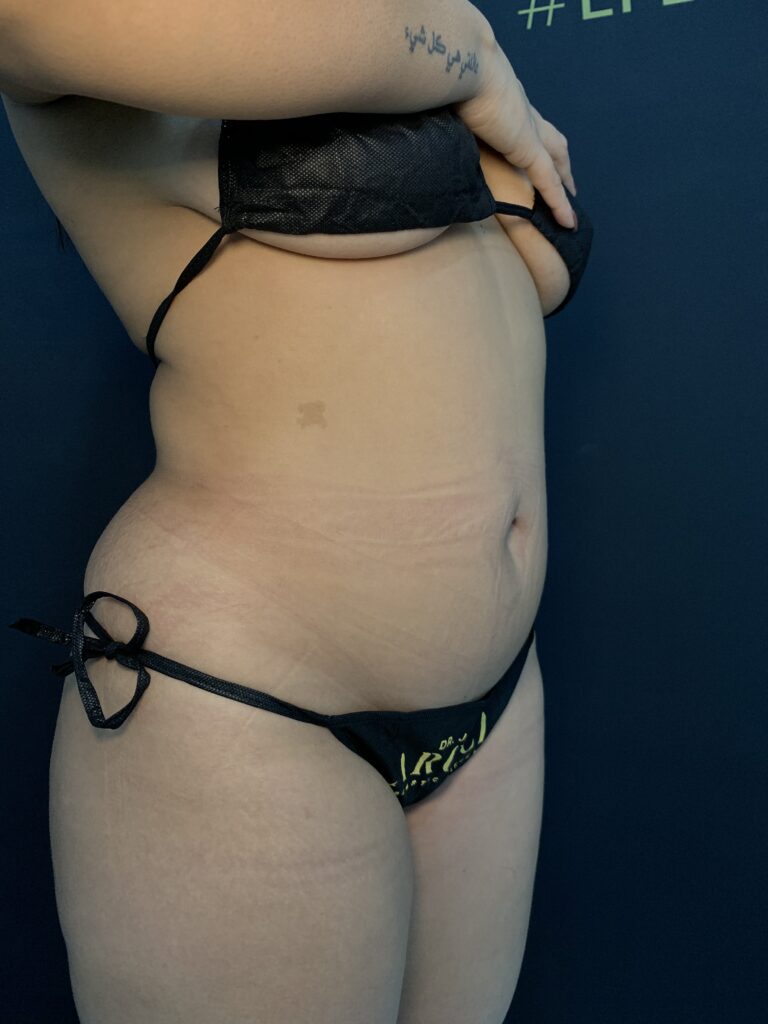
What remains is excess skin tissue that hangs, forms folds, and causes both physical and emotional discomfort. In patients who have lost 30 or 40 kilos after bariatric surgery or a prolonged diet, this excess can be very significant. I have treated patients who lost approximately 40 kilos after weight loss surgery and were left with large amounts of remaining skin, extensive stretch marks, and a degree of sagging that has no solution through conservative methods.
Difference Between Excess Fat and Excess Skin
This distinction is key, and many people come to my office without a clear understanding of it. Localized fat can be addressed with liposculpture or body contouring procedures. But excess skin is surplus tissue that cannot be reduced through exercise, cold therapy, radiofrequency, or any non-surgical treatment.
If you pinch your abdomen and feel a thick fold of skin rather than a fat deposit, you are dealing with a skin surplus problem. The same applies if the skin forms an “apron” that hangs over the pubic area. In these cases, a tummy tuck is the indicated procedure to remove that tissue, tighten the abdominal wall, and restore structure to the abdomen.
Signs You Need a Tummy Tuck After Weight Loss
Not every person who loses weight needs surgery. But there are clear signs that indicate you may be a candidate:
- Skin that hangs in the form of an apron or fold over the pubic area.
- Recurrent irritation or infections under skin folds.
- A feeling of “emptiness” or weakness in the abdominal wall.
- Extensive stretch marks on the lower abdomen.
- A bulging abdomen despite being at a healthy weight (may indicate diastasis recti).
- Clothing that does not fit properly in the midsection, regardless of size.
When several of these signs coincide, the problem is no longer about fat or lack of exercise. It is structural. And it requires a comprehensive surgical evaluation to determine the best approach.
Your Transformation Begins with an Expert Evaluation
Take the first step with a personalized consultation with Dr. Jaime Aroca’s team. We analyze your case, answer all your questions, and design a safe surgical plan tailored to your body and expectations.
Am I a Candidate for a Tummy Tuck After Weight Loss?
This is probably the question I hear most often from post-weight loss patients. And the honest answer is: it depends. Not on what you want, but on the condition your body is in today.
Requirements and Conditions to Be a Good Candidate
The first requirement is having a stable weight. This means your weight should not be fluctuating significantly. Clinical literature recommends maintaining a stable weight for at least 6 to 12 months before considering surgery. Why? Because operating while the body is still changing compromises the outcome and increases risks.
Other factors I evaluate include:
- Nutritional status: especially in post-bariatric patients, it is common to find deficiencies in protein, iron, vitamin B12, and vitamin D. Correcting them before surgery is essential for proper healing.
- Skin quality: the amount of stretch marks, the degree of sagging, and the thickness of the panniculus all influence the surgical plan.
- Diastasis recti: previous obesity deeply weakens the rectus abdominis muscles and causes separation. In these patients, muscle plication—the realignment and suturing of the rectus muscles—is a central part of the surgery.
- Realistic expectations: I am not going to sell you fantasies. The goal is to restore structure, firmness, and proportion. Results vary from case to case.
How Long to Wait After Weight Loss
Rushing is the enemy of a good result. If you lost weight through diet and exercise, the ideal approach is to wait until your weight has been stable for a minimum of 6 months, ideally one year, before planning surgery.
If the weight loss was through bariatric surgery, the recommended waiting period is longer: between 12 and 18 months after the bariatric procedure. During that period, the body continues to lose weight, redistribute tissues, and adapt metabolically. Operating before that stabilization may mean the results change over time.
Special Considerations After Bariatric Surgery
Post-bariatric patients represent a unique group. The excess skin is typically much more extensive, the muscles are weaker, and the surgical needs are greater.
In these cases, the tummy tuck incision and scar are necessarily larger. It may extend from hip to hip and even require complementary work in other areas: arms, thighs, back, and breast area. My Art Total Shaping approach is particularly significant for people with considerable weight loss, as it allows a comprehensive reconstruction that goes beyond the abdomen.
It is also important to consider that the rate of local complications is higher in this group: seromas, wound healing problems, and infection are more common than in a conventional tummy tuck. That is why careful patient selection, preoperative preparation, and strict follow-up are non-negotiable.
Tummy Tuck Results After Weight Loss
How Flat Does the Abdomen Get After Surgery
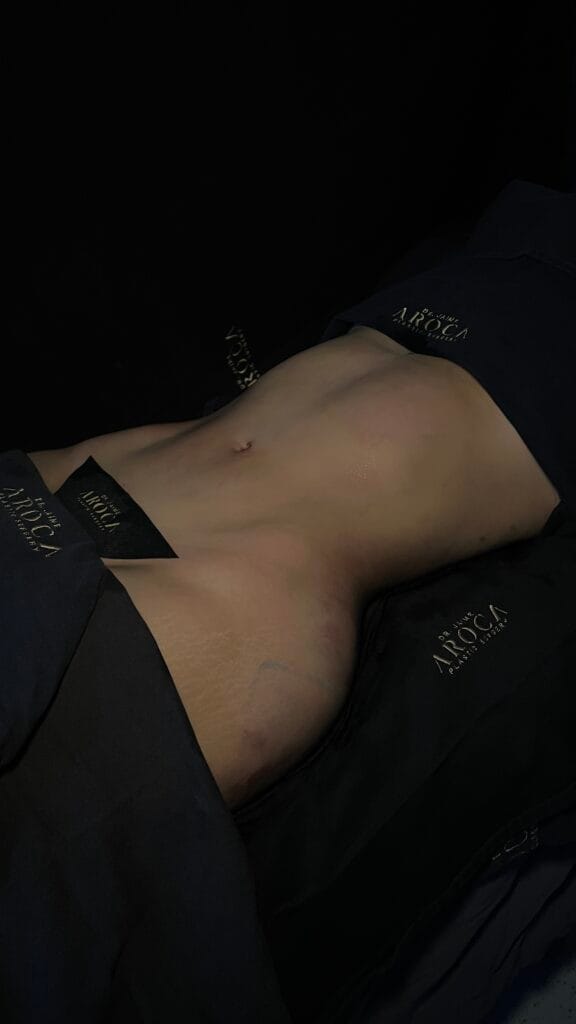
One of the central goals of a tummy tuck in post-weight loss patients is to restore a flat and firm abdominal contour. This involves two things: removing excess skin and repairing the muscle wall.
When I perform the rectus abdominis plication—the suture that brings together and reinforces the separated muscles—the result is an abdomen with real structure, not just “no excess skin.” I restore strength to a wall that had been weakened by obesity for years. In patients who have undergone massive weight loss, such as those who lost 40 kilos after bariatric surgery, I have achieved completely flat abdomens with noticeable waist definition.
But let me be clear: the degree of flatness and definition depends on individual factors. The quality of the remaining skin, the amount of residual fat, the severity of the diastasis, and previous surgical history all play a role. Results vary, and this is determined during the individual evaluation.
Reported satisfaction in the literature is high: recent studies show up to 98% satisfaction among post-weight loss tummy tuck patients, with significant improvements in quality of life, self-esteem, and psychological well-being.
Are the Results Permanent?
The skin that is removed does not grow back. The muscles that are repaired maintain their position. In that sense, yes: the structural changes from a tummy tuck are permanent.
However, permanent does not mean immune to time or your decisions. If there is significant weight gain after surgery, the skin can stretch again and the tissues can become distended once more. A subsequent pregnancy can also compromise the results, which is why I recommend planning this procedure when there are no future pregnancy plans.
Surgery resolves the structural problem. Maintaining that result is a shared responsibility between the surgeon and the patient.
How to Maintain Long-Term Results
Postoperative discipline is as important as the surgery itself. These are the key points I share with my patients:
- Maintain a stable weight: fluctuations greater than 5–7 kilos can affect the result.
- Regular physical activity: once cleared, exercise helps maintain muscle tone and skin quality.
- Proper nutrition: especially proteins and micronutrients that promote healing and tissue health.
- Postoperative follow-up: check-ups do not end when you leave the clinic. Ongoing follow-up is part of the protocol.
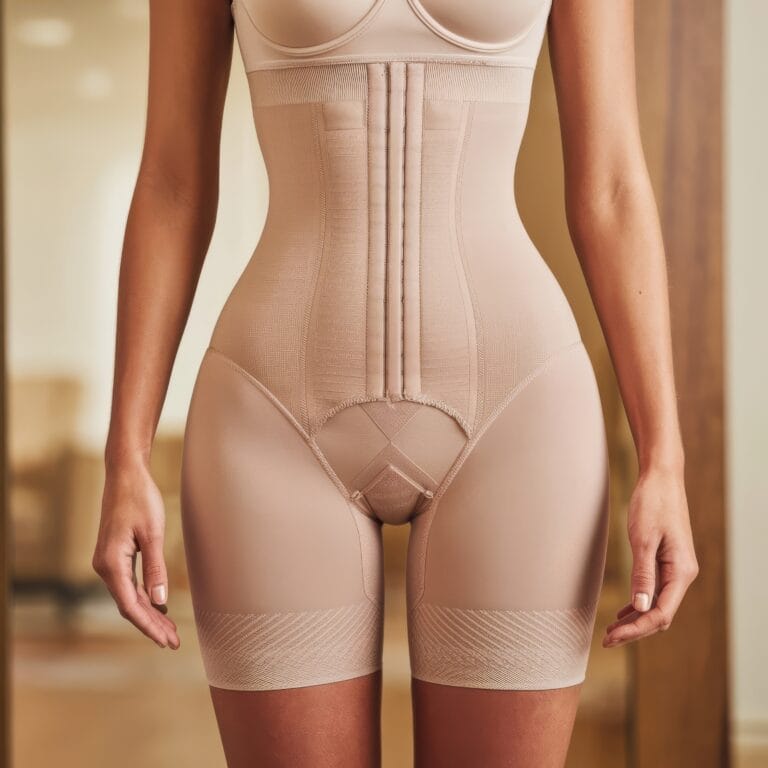
- Proper use of the compression garment: for the prescribed period, without exceptions.
I have seen patients who maintain excellent results years later because they were disciplined. And I have seen the opposite. Surgery opens the door: crossing it and staying on the other side is up to each individual.
If you are at that point where you lost the weight but your body does not reflect the effort, the most important thing is an honest and personalized evaluation. Every case is different, and the surgical plan must be adapted to your anatomy, your medical history, and your realistic expectations. You can schedule your evaluation with my team to determine if you are a candidate and what the best approach for your case would be.
A Safe Process from Start to Finish
“Every surgery begins long before the operating room. Proper preparation and a rigorous evaluation are the foundation of a successful and safe outcome.”


Frequently Asked Questions About Tummy Tuck After Major Weight Loss
We answer the most common questions from our patients to help you make an informed and safe decision.