
You just came out of your BBL, you’re at the recovery house, and suddenly something doesn’t feel right. Is this normal? Should I be worried? That question, sometimes whispered, sometimes urgent, is one of the ones I hear most in my practice.
And the honest answer is: it depends. There are discomforts that are an expected part of the process. And there are signs that cannot wait even an hour. Knowing how to tell them apart can make the difference between a smooth recovery and a serious complication.
In this article, I explain from my experience as a board-certified plastic surgeon what the warning signs after a BBL are, when they appear, what causes them, and most importantly, what you should do if you identify them. Not to scare you, but so you have clear information and make informed decisions at every stage of your recovery.
What Is Normal After a BBL?
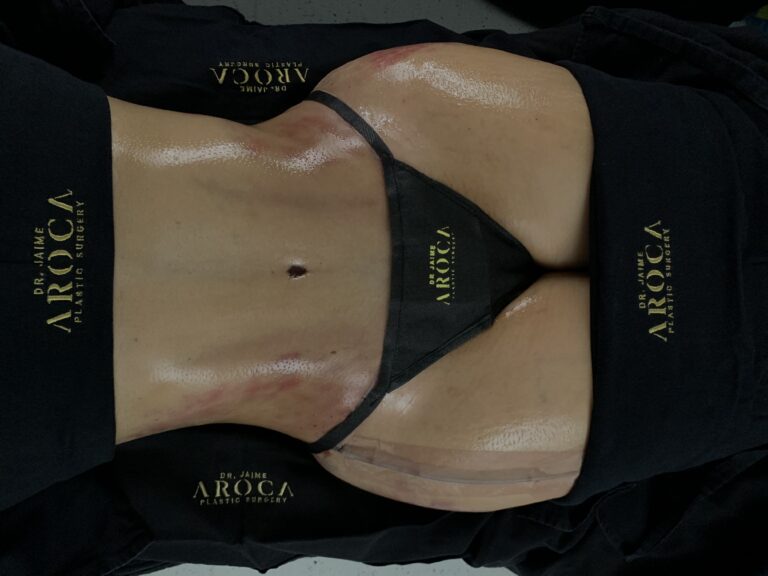
Before talking about alarms, let’s talk about what’s expected. After gluteal liposculpture with fat transfer, your body has just gone through a real surgical process. There is tissue trauma, fat manipulation, donor areas and recipient areas. All of this generates an inflammatory response that is completely physiological.
In the first 48 hours, it is normal to feel:
- Moderate pain in the areas where fat was extracted and injected. It is controlled with the medication I prescribe.
- Generalized swelling, especially in the buttocks, abdomen, and flanks.
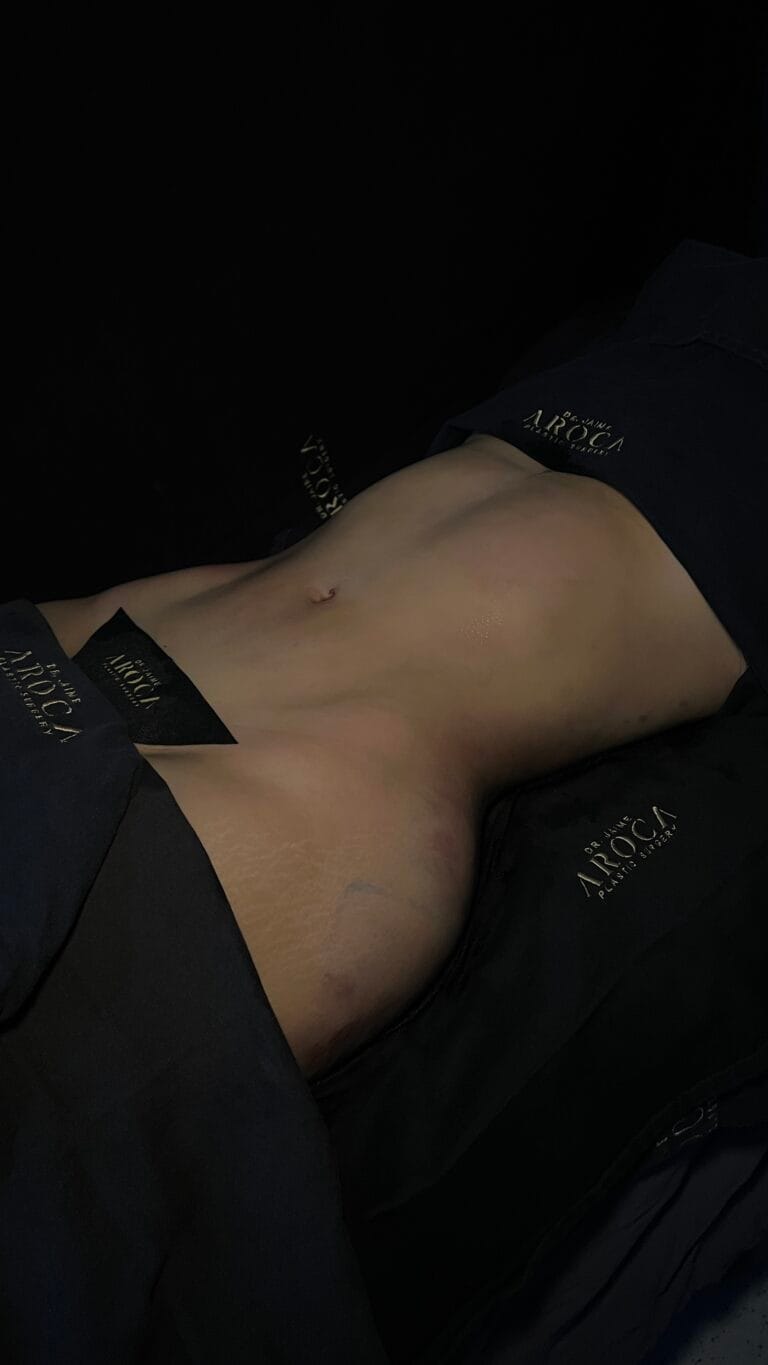
- Bruising (hematomas) that may look intense but tend to resolve.
- Some mild bleeding through the drainage incisions. This actually helps reduce fluid accumulation.
Swelling usually peaks between day 5 and day 7. And yes, it can look exaggerated. Many patients get alarmed seeing themselves more swollen on the fifth day than on the first, but this is part of the natural healing process.
The compression garment plays a key role here: it reduces edema, helps tissues adapt, and improves circulation. It is not optional. It is part of the treatment.
Now, there is a line between what is expected and what requires attention. And we are going to define that line clearly.
Warning Signs That Require Immediate Attention
When I talk about warning signs after a BBL, I am referring to symptoms that indicate something is going wrong and you need to contact your surgeon or go to the emergency room without delay. Not tomorrow. Not after waiting to see what happens. Now.
Difficulty Breathing
This is, without a doubt, the most critical sign. If after your BBL you experience difficulty breathing, a feeling of shortness of breath, chest pain, or mental confusion, you need immediate emergency care.
Why? Because it could be fat embolism syndrome (FES). This occurs when fat particles enter the bloodstream and travel to the lungs. It is a rare complication, reported in approximately 0.06% of cases when the subcutaneous technique is used, according to data published in PubMed (2020), but potentially fatal.
The good news is that with current safety protocols, such as injection exclusively in the subcutaneous plane and the use of appropriate cannulas, this risk has been significantly reduced. But that does not mean you can ignore the sign. If you feel short of breath: seek help.
Signs of Infection
Another sign that cannot wait. The classic signs of infection after a BBL include:
- High fever (above 38.5 °C) that persists or increases.
- Redness that spreads beyond the operated area, with excessive warmth to the touch.
- Foul-smelling discharge, greenish or yellowish in color.
- Pain that worsens instead of improving as days go by.
- Intense chills or progressive general malaise.
A case series published in PMC (2023) documented gluteal infections by non-tuberculous mycobacteria after BBL, with tender, darkened, and indurated lesions not only on the buttocks but also on the arms and inguinal area. This reminds us that infections do not always remain limited to the operated area.
According to information from recognized medical sources, symptoms such as persistent fever, expanding redness, and unusual discharge after any surgery should be evaluated without delay.
Other signs that also require immediate contact with your surgeon:
- Bleeding that does not stop with sustained pressure.
- Severe dizziness or fainting.
- Persistent vomiting that prevents hydration.
My rule is simple: when in doubt, call. I would rather examine a patient with normal inflammation than let an early complication slip by.
Timeline: When Complications Appear
Understanding when problems can arise gives you a huge advantage: knowing what to watch for and at what point.
First 24-48 hours
This is the period of highest vigilance. Severe complications, such as fat embolism, tend to occur during surgery or in the hours immediately after. That is why I operate exclusively in accredited hospitals, with general anesthesia and continuous monitoring. And that is why I insist that the first hours are for absolute rest and observation.
Days 3 to 7
Inflammation reaches its peak. This is when most patients worry about how they look, but it is also when seromas (fluid accumulations) may start to appear and need draining. Discipline with the garment and positioning instructions is essential at this stage.
Weeks 1 to 3
After the first week, the risk of a serious systemic complication decreases considerably. But this is where infections or fat necrosis may manifest. Fat necrosis occurs when part of the transferred fat does not survive and the body generates a localized inflammatory response: firm nodules, skin color changes, tenderness. It does not always require surgical intervention, but it does require evaluation.
Weeks 4 to 8
Most bruising has already resolved. Tissues are in an active process of healing and remodeling. Follow-up appointments at this stage are key to evaluating progress and detecting any irregularity.
That is why postoperative follow-up is not a luxury. It is part of the treatment. In my practice, I schedule in-person checkups and offer telemedicine for international patients, because a BBL does not end when you leave the operating room.
How Complications Are Prevented
Prevention starts before surgery and extends weeks after. There are factors that depend on the surgeon, and there are factors that depend on you. Both matter.
From the patient’s side:
- Do not smoke. This is non-negotiable. Tobacco compromises circulation, delays healing, and increases the risk of necrosis. If you smoke, I cannot operate on you.
- Avoid sitting directly on the buttocks during the first weeks. This protects the transferred fat and promotes its integration.
- Wear the compression garment 24/7 for the time indicated.
- Do not do physical exertion or expose yourself to the sun during the indicated period.
- Follow the medication regimen, including prophylactic antibiotics, and attend all follow-up appointments.
- Adequate hydration and nutrition. It seems basic, but good nutrition accelerates recovery.
The Role of the Subcutaneous Technique
From the surgical side, technique is everything. And here there is a point I need you to understand clearly.
The main cause of mortality historically associated with BBL was fat injection into deep planes, intramuscular or submuscular, where fat could enter the major gluteal vessels and cause embolism. Published data on BBL-associated mortality in South Florida (PMC, 2023) documented this pattern.
Today, international plastic surgery societies (ASERF, ASAPS, ISAPS, and ASPS) recommend a clear safety standard:
- Injection exclusively in the subcutaneous plane, never intramuscular.
- Use of intraoperative ultrasound to verify cannula position in real time.
- Cannulas with a diameter greater than 4.1 mm to control flow and depth.
Studies published in 2020 (PubMed 32306045) confirm that the adoption of these recommendations has significantly improved BBL safety. And in my practice, this is the protocol I follow without exceptions.
The subcutaneous technique is not a preference. It is a safety standard backed by evidence.
The Importance of Choosing a Board-Certified Surgeon
I will tell you with the frankness that characterizes me: the BBL is one of the plastic surgery procedures where the choice of surgeon has the greatest impact on your safety. Not just on your aesthetic result, which matters too, but on your life.
A board-certified plastic surgeon:
- Knows gluteal anatomy in depth and knows exactly which plane they are injecting into.
- Operates in accredited hospitals, with anesthesiology equipment and full monitoring.
- Controls the volume of transferred fat with clinical judgment, not by patient demand.
- Has emergency protocols prepared and a multidisciplinary team available.
- Provides real follow-up: checkups, monitoring, and availability to respond when something doesn’t feel normal.
In my practice, the individual assessment determines candidacy and plan. Not all patients are candidates for BBL. There are medical conditions, weight factors, habits, or expectations that may make the procedure not the best option, and I prefer to tell you upfront rather than expose you to unnecessary risk.
Colombia is an internationally recognized destination for plastic surgery, and Barranquilla offers high-level medical infrastructure. But infrastructure does not replace the surgeon’s judgment. Before making your decision, verify credentials, ask about techniques, demand a personalized surgical plan, and make sure your surgeon prioritizes your safety above everything else.
Results vary from person to person, and there are risks that must be discussed during consultation, calmly, before signing an informed consent. That is the correct process.
Frequently Asked Questions
How long is the full recovery from a BBL?
Overall recovery takes between 2 and 3 months. During the first 6 weeks, you should avoid intense exercise, sitting directly on the buttocks, and any activity that compromises the treated area. The definitive result is seen between 4 and 6 months, once the inflammation fully resolves and the transferred fat stabilizes.
Is it normal to have a mild fever after a BBL?
A low-grade fever (slightly elevated temperature, below 38 °C) in the first 24-48 hours may be part of the normal inflammatory response. But if the fever exceeds 38.5 °C, persists for more than a day, or is accompanied by chills, redness, or unusual discharge, you should contact your surgeon immediately.
Who is an ideal candidate for a BBL?
Healthy individuals, without uncontrolled chronic diseases, with sufficient donor fat and realistic expectations. I do not operate on just anyone: individual evaluation is essential to determine whether the BBL is safe and appropriate for your particular case.
Can I travel after a BBL if I am an international patient?
Yes, but not before receiving medical clearance. In my practice, I recommend a minimum of 10 to 14 days’ stay in Barranquilla for adequate postoperative checkups before returning to your city. The return trip requires planning: proper positioning, use of a special cushion, and telemedicine follow-up once you are home.
Can the transferred fat be lost?
Part of the fat is naturally reabsorbed in the first weeks; this is expected and I account for it in the surgical planning. The percentage that survives depends on multiple factors: technique used, postoperative care, stable weight, and patient discipline. That is why I insist: the postoperative period is not passive. Your commitment directly influences the result.