
One of the questions I hear most often in consultations is: “Doctor, when will I see my results?” And I understand. You just went through surgery, you’re swollen, wearing a compression garment, unable to sit the way you used to, and you want to see what you imagined right now. But a gluteal fat transfer doesn’t work that way. It’s a biological process with timelines that cannot be rushed.
In this article, I explain from my experience and based on clinical evidence how BBL results evolve week by week, what to expect at each stage, and what you can do to maximize fat retention. No exaggerated promises. Just clarity.
Key Points
What Is a Gluteal Fat Transfer and How Does It Work?
A gluteal fat transfer, popularly known as BBL (Brazilian Butt Lift), is a procedure that uses your own fat to increase volume and improve the shape of your buttocks. No external materials are placed. Everything comes from your body.
The Process: Liposuction + Purification + Fat Injection
The procedure has three clear phases:
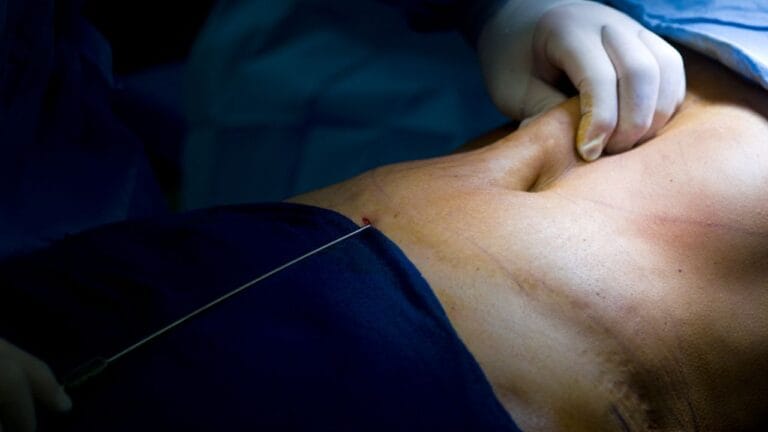
- Liposuction: I extract fat from areas where there is excess—abdomen, flanks, lower back, thighs—using techniques such as VASER or microaire to preserve adipocyte viability.
- Purification: The fat is processed to separate fluids, oil, and damaged cells. Only viable fat is injected.
- Injection: I perform the fat transfer into the lateral, upper, and middle gluteal region through micro-injection—small droplets distributed across multiple planes—to achieve defined contouring and immediate hip projection.
This micro-injection technique is key to graft survival. The smaller the fat droplets, the greater the contact with the recipient tissue and the better the blood supply.
Gluteal Fat Transfer vs Buttock Implants: Key Differences
The fundamental difference is the material. In a fat transfer, I use your own fat; with implants, a silicone prosthesis is placed. A fat transfer offers a more natural feel, allows simultaneous waist sculpting, and carries no risk of capsular contracture. However, it has a limitation: the final volume depends on how much donor fat you have and how much survives. Implants provide predictable volume, but with their own risks such as displacement or encapsulation.
The choice depends on your anatomy, your goals, and an individual assessment.
Results Timeline: Week by Week After Gluteal Fat Transfer
Here is what you need to know: the result you see when leaving the operating room is not the final result. And what you see at two weeks isn’t either. Your body goes through a process of inflammation, reabsorption, and settling that takes months.
First 48 Hours: Peak Swelling and Immediate Care
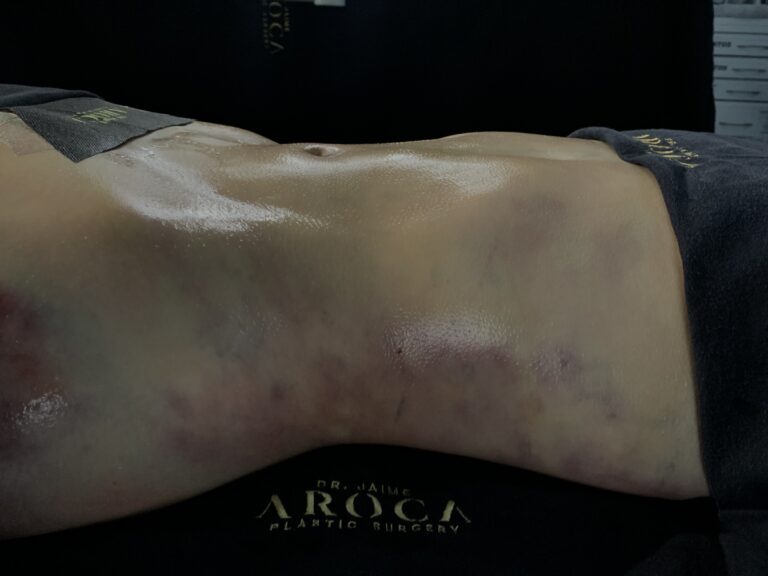
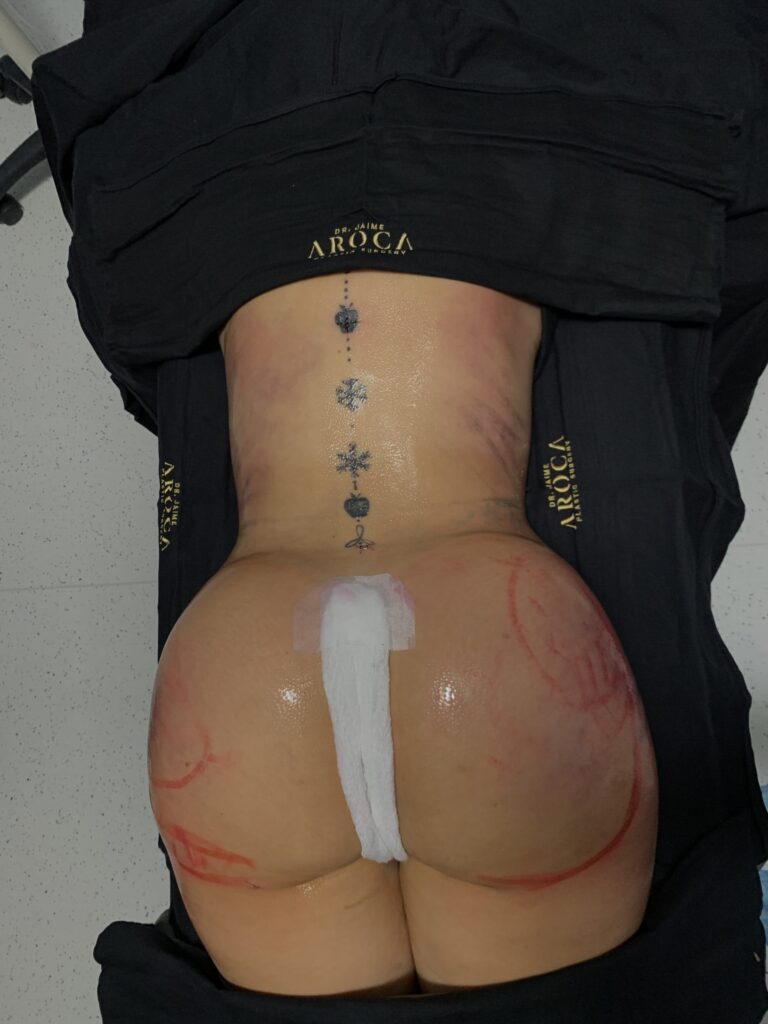
On the operating table, the change is already noticeable: the hip projection, the waist reduction. But in the first 48 hours, swelling reaches its peak. The buttocks look more voluminous than they will be. There is bruising, discomfort, and fluid retention. This is completely normal.
Week 1: Initial Recovery Phase
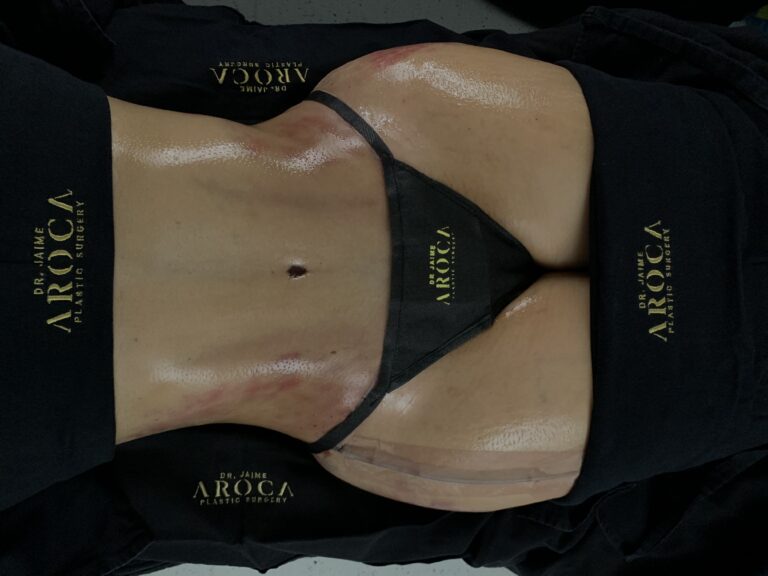
During the first week, the body is in inflammatory mode. The donor area (where liposuction was performed) may look more swollen than the buttocks themselves. At this stage, the priority is to avoid sitting directly on the buttocks, use the BBL pillow, and follow instructions to the letter. You are not on vacation. You are recovering.
Weeks 2-3: Critical Period for Fat Survival
This is the most delicate period. The injected fat is seeking to connect with the blood supply of the recipient tissue. Any sustained pressure on the buttocks can compromise that connection. Swelling begins to decrease and the new silhouette becomes visible, but we are still far from the final result.
Weeks 4-6: Gradual Return to Activities
Most of the swelling has resolved. You can begin to resume light activities, always with medical clearance. Many patients worry at this stage because they feel their buttocks “shrank.” This is expected: the inflammation subsides and some of the fat is reabsorbed. It is a normal process that does not mean something went wrong.
Months 2-3: Swelling Subsides and Results Begin to Take Shape
This is where things improve noticeably. Residual swelling decreases substantially. The buttocks begin to look more defined, and the transferred fat integrates into the tissues. You are seeing approximately 80% of the final result. During the first month your body is changing, but the final results are best appreciated at three months when the swelling has completely disappeared and the tissues have adjusted to their new position.
Months 4-6: Final Result Visible
Between the fourth and sixth month, the surviving fat has established a new blood supply. Shape and proportion stabilize. Residual swelling disappears. This is your real result.
The Fluffing Effect: What It Is and When It Happens
What Does Fluffing Mean in Gluteal Fat Transfer?
The term “fluffing” is colloquially used to describe the phase when the buttocks, after looking compressed and somewhat flattened due to inflammation and the compression garment, begin to soften, round out, and take their definitive shape. It is not a formal medical term, but it describes something real: the settling of the tissues.
Signs That You Are in the Fluffing Stage
- The buttocks feel less firm and more natural to the touch.
- The shape begins to look more rounded and projected.
- The skin in the area softens.
- The visual difference between the donor area and the buttocks balances out.
How Long Does the Fluffing Stage Last?
It generally occurs between the second and sixth postoperative month. It is gradual—you will not wake up one day with the final result—and it coincides with the complete resolution of inflammation and graft settling.
4 Weeks Post-Surgery and It Looks Flat: Is This Normal?
Yes. I hear this constantly. At four weeks, the initial swelling has subsided and the fat that did not survive has already been reabsorbed. But the fluffing has not fully begun yet. It is the most emotionally frustrating stage, but it does not reflect the final result. The postoperative process requires patience and care: not everything is immediate, but with the right process and proper guidance, the results come.
Ready to Transform Your Silhouette with Natural, Long-Lasting Results?
Gluteal fat transfer uses your own fat to redefine curves, slim the waist, and project the buttocks naturally. No implants, no risk of rejection, with results that can last over a decade when a stable weight is maintained.
When Are the Definitive Results Visible?
Immediate Result vs Final Result: Why They Are So Different
In the operating room, the change is immediately visible. But that volume includes swelling and fat that will be reabsorbed. The immediate result is always more voluminous than the definitive one. That is why I insist on not judging the result in the first few weeks.
The Science Behind Fat Graft Survival
The transferred fat needs to develop new vascular connections to survive. The adipose cells that successfully integrate with the recipient tissue and receive blood supply remain. Those that do not are reabsorbed. With proper micro-injection technique, between 60% and 80% of the transferred fat survives. A 30-40% reabsorption in the first three months is normal and expected.
Factors That Affect How Much Fat Survives
- Surgical technique: Micro-injection in multiple planes is essential.
- Pressure on the buttocks: Sitting directly compresses the graft and reduces blood flow. The BBL pillow and postural restrictions exist for a concrete reason.
- Smoking: Smoking compromises microcirculation. This is non-negotiable: if you smoke, the risk of graft loss increases significantly.
- Nutrition: Adequate protein and proper hydration promote tissue integration.
- Inadequate compression: The compression garment should not compress the buttocks, only the donor areas.
Are the Results Permanent?
The fat that survives past six months is considered permanent. It behaves like normal body fat: if you gain weight, the buttocks increase proportionally; if you lose weight, they decrease. Surgery gives a boost, but maintaining results depends on you—nutrition, movement, wellness—it all adds up. With a healthy lifestyle, results can last for decades.
How to Maximize Your Results After a Fat Transfer
Compression Garment: When to Wear It and for How Long
The compression garment is mandatory for the first 6 weeks, 24/7. Its function is to reduce swelling in the donor areas, help the skin retract, and facilitate fluid drainage. But be careful: the garment should not compress the buttocks. It must be specifically designed for gluteal fat transfer, with an opening or no compression in the buttock area.
Sitting Restrictions and Sleeping Positions
Avoid sitting directly on your buttocks for at least the first 2-3 weeks. Ideally, extend this precaution to 6-8 weeks. Use the BBL pillow when there is no other option. For sleeping, lie face down or on your side. These restrictions are not arbitrary—they protect the vascular connection the fat needs to survive.
Diet to Promote Fat Graft Survival
A diet rich in protein, healthy fats, and micronutrients promotes healing and graft integration. This is not the time for restrictive diets. Your body needs calories and nutrients to heal. Results will be long-lasting as long as you maintain a healthy lifestyle—this includes a balanced diet and regular exercise in the long term.
Hydration and Recommended Supplements
Maintain adequate hydration—at least 2 liters of water per day. Some supplements such as vitamin C, zinc, and arginine can support healing, but always under medical guidance. Do not self-medicate.
Quitting Smoking: Its Direct Impact on Fat Survival
Tobacco constricts blood vessels and reduces oxygen supply to tissues. For transferred fat, which depends on new vascular connections to survive, this is devastating. The rule is clear: stop smoking at least 4 weeks before and 4 weeks after surgery. There are no exceptions.
Postoperative Massages and Lymphatic Drainage: Their Role in Results
Are Massages Necessary After a Fat Transfer?
Manual lymphatic drainage helps reduce swelling, mobilize retained fluids, and improve the quality of results in the donor areas. It is a valuable complementary tool—not a luxury, but part of the postoperative protocol.
When to Begin and How Often
I generally start lymphatic drainage sessions between the first and second postoperative week, depending on each patient’s progress. The usual frequency is 2-3 sessions per week during the first 4-6 weeks, then spaced out as needed.
How They Affect the Donor Area (Liposuction) vs the Recipient Area (Buttocks)
There is an important distinction here. Lymphatic drainage and massages are applied with greater intensity in the donor areas—abdomen, flanks, back—to prevent fibrosis and improve skin retraction. In the buttocks, the approach is much gentler and more conservative. We do not want to aggressively manipulate an area where the fat graft is in the process of integration. Technique matters, and that is why it must be done by a professional with experience in body plastic surgery postoperative care.
Long-Term Results: What to Expect at 1, 3, and 5 Years
What Happens If I Gain or Lose Weight After the Fat Transfer?
The transferred fat behaves like your body’s native fat. If you gain 5 kilos, the buttocks will gain volume proportionally. If you lose 5 kilos, they will lose volume. That is why I recommend maintaining a stable weight after surgery. Large fluctuations can alter the proportions we achieved in the operating room.
Natural Aging and Its Effect on Results
Over the years, all tissues change. The skin loses elasticity, fat redistributes, and gravity takes its toll. A gluteal fat transfer does not stop aging, but results hold up remarkably well over time, especially if you maintain physical activity and a healthy weight. At 3 and 5 years, most patients remain satisfied with their silhouette. Glute training can, in fact, improve and maintain long-term results.
When Might I Need a Revision or Second Procedure?
Some patients, particularly those with limited donor fat available or who experienced greater-than-expected reabsorption, may consider a second procedure after 6-12 months. This is evaluated on a case-by-case basis. Not all patients need a revision, but the option exists and is safe when properly planned.
A Safe Process from Start to Finish
“Every surgery begins long before the operating room. Proper preparation and a rigorous assessment are the foundation of a successful and safe result.”


Before and After: Real Evolution of Gluteal Fat Transfer Results
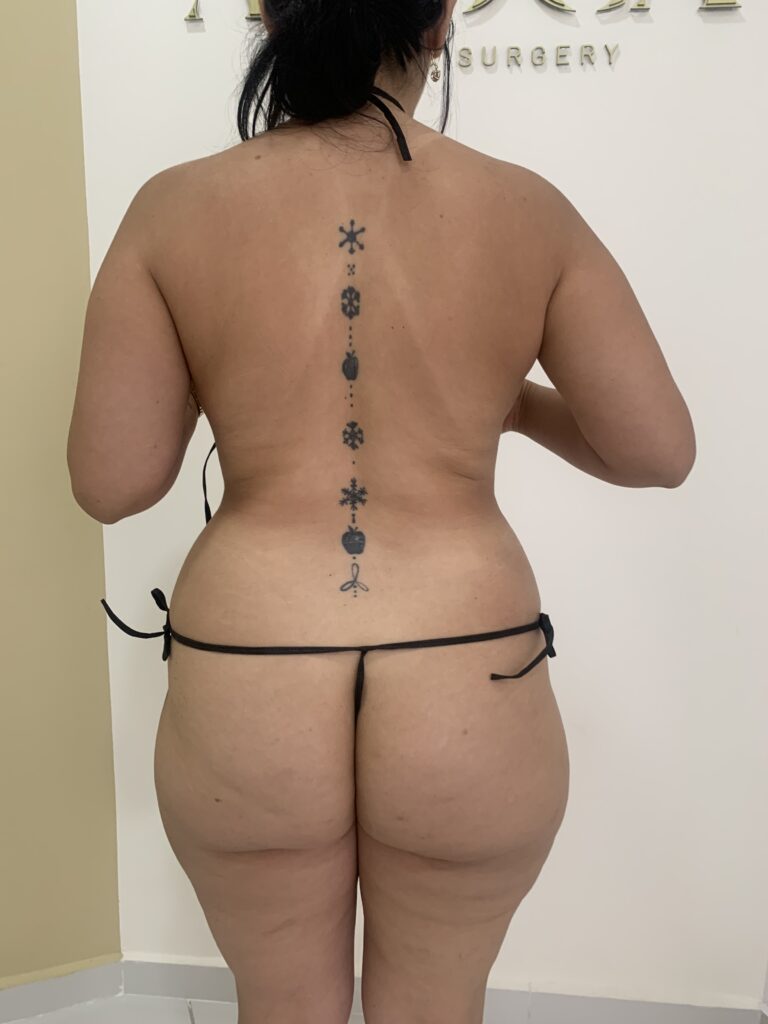
Before and after photos are a useful tool for understanding the evolution, but they must be interpreted in context. Every body starts from a different point: different amounts of donor fat, different skin quality, different bone structure. What works for one patient is not necessarily the plan for another.
In my practice, I document the evolution at 3, 6, and 12 months. What I typically see is consistent with what the literature describes: an initial volume that decreases in the first few weeks, a settling period where the result seems to “disappear,” and finally the fluffing that reveals the definitive shape. It is a process that requires patience.
If you are considering a gluteal fat transfer, my recommendation is always the same: schedule an individual assessment. There we evaluate your anatomy, your goals, your donor fat availability, and design a realistic plan. Results vary, and honesty during the consultation is what makes the difference between fulfilled expectations and frustration.
Surgery is the first step. What comes next—care, discipline, follow-up—defines the final result.
Frequently Asked Questions About BBL Results
We address our patients’ most common questions to help you make an informed and safe decision.