
Liposuction or liposculpture? It is one of the questions I hear most often in consultations, and the confusion makes sense: both terms sound similar, share the same principle (aspirating fat), and are often used interchangeably. But they are not the same. And the difference between liposuction and liposculpture is not just semantic: it directly impacts what you can expect as a result.
In my practice, the distinction matters, and a lot, because it defines the surgical objective, the technique I will use, and the type of result we can achieve together. Removing volume is not the same as sculpting a contour. And in this article, I want to explain both with complete clarity.
Key Points
- The main difference between liposculpture and liposuction lies in the objective: liposuction reduces localized fat volume, while liposculpture redistributes fat to sculpt defined body contours.
- Liposculpture allows reusing extracted fat through fat transfer to areas such as buttocks, breasts, or face, combining volume reduction with body augmentation and definition.
- Not all patients are candidates for liposculpture: good skin elasticity, musculature without diastasis, and an adipose panniculus less than 4 cm for abdominal etching are required.
- When there is severe laxity, excess skin, or abdominal diastasis, abdominoplasty is more indicated than liposculpture, and can be combined with body contouring techniques.
- Assisted technology, such as vibrolipolysis or J-Plasma, improves precision and recovery, but does not replace the surgeon’s experience and judgment.
- The results of liposculpture vs liposuction can be lasting only if a healthy lifestyle with a balanced diet and regular exercise is maintained.
What Is Liposuction?
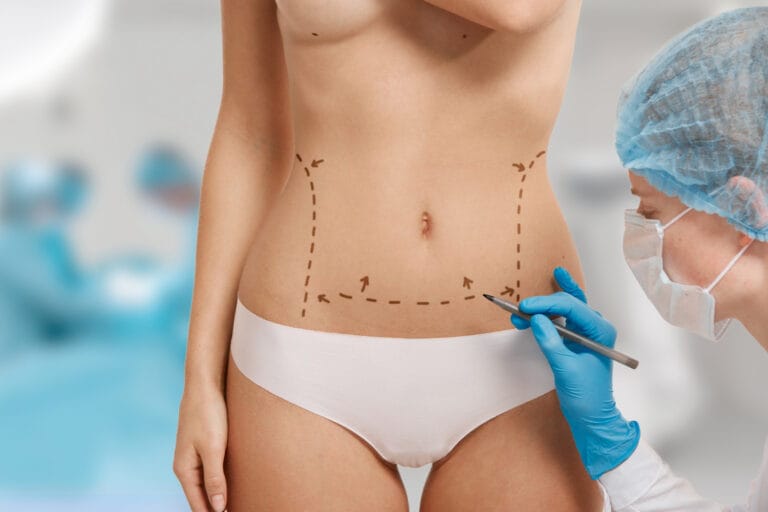
Liposuction is a surgical procedure designed to extract localized fat deposits using cannulas connected to an aspiration system. It is one of the most performed aesthetic surgeries worldwide.
The main objective is to reduce volume in specific areas: abdomen, thighs, hips, back, arms. It focuses on removing fat that does not respond to diet or exercise, not on redefining the silhouette as such.
This does not mean it is a minor procedure. Liposuction requires experience, judgment to determine how much fat is safe to extract, and knowledge of subcutaneous anatomy to avoid complications. But its scope is, by definition, more limited than that of liposculpture.
What Is Liposculpture?
Liposculpture goes a step further. In addition to extracting fat, it redistributes that fatty tissue to other areas of the body to create natural and proportioned contours. In other words, liposculpture does not just remove: it also builds.
This process includes purifying the extracted fat and strategically reinjecting it into areas such as buttocks, breasts, or face, which is known as fat transfer. Thus, a double effect is achieved: reducing where there is excess and augmenting where there is a deficit.
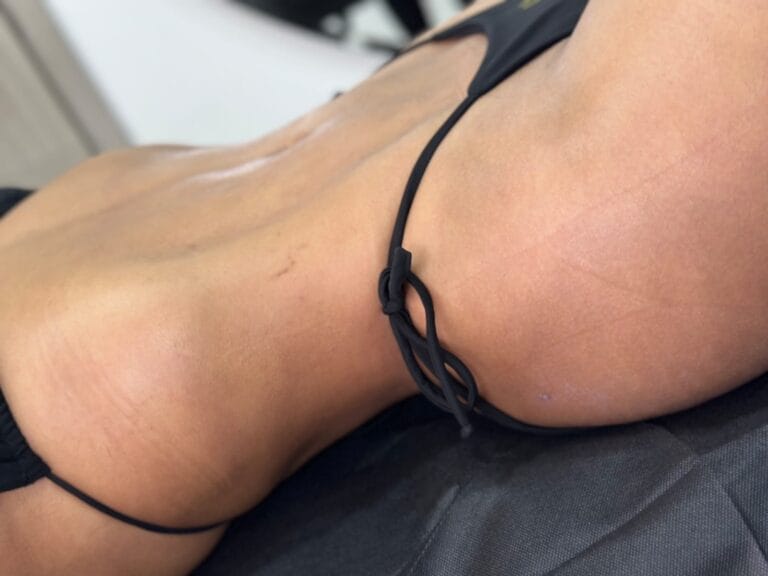
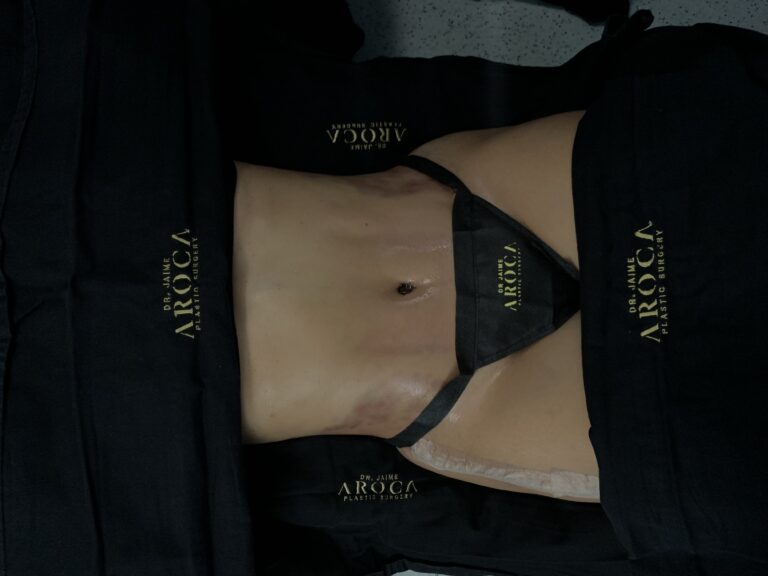
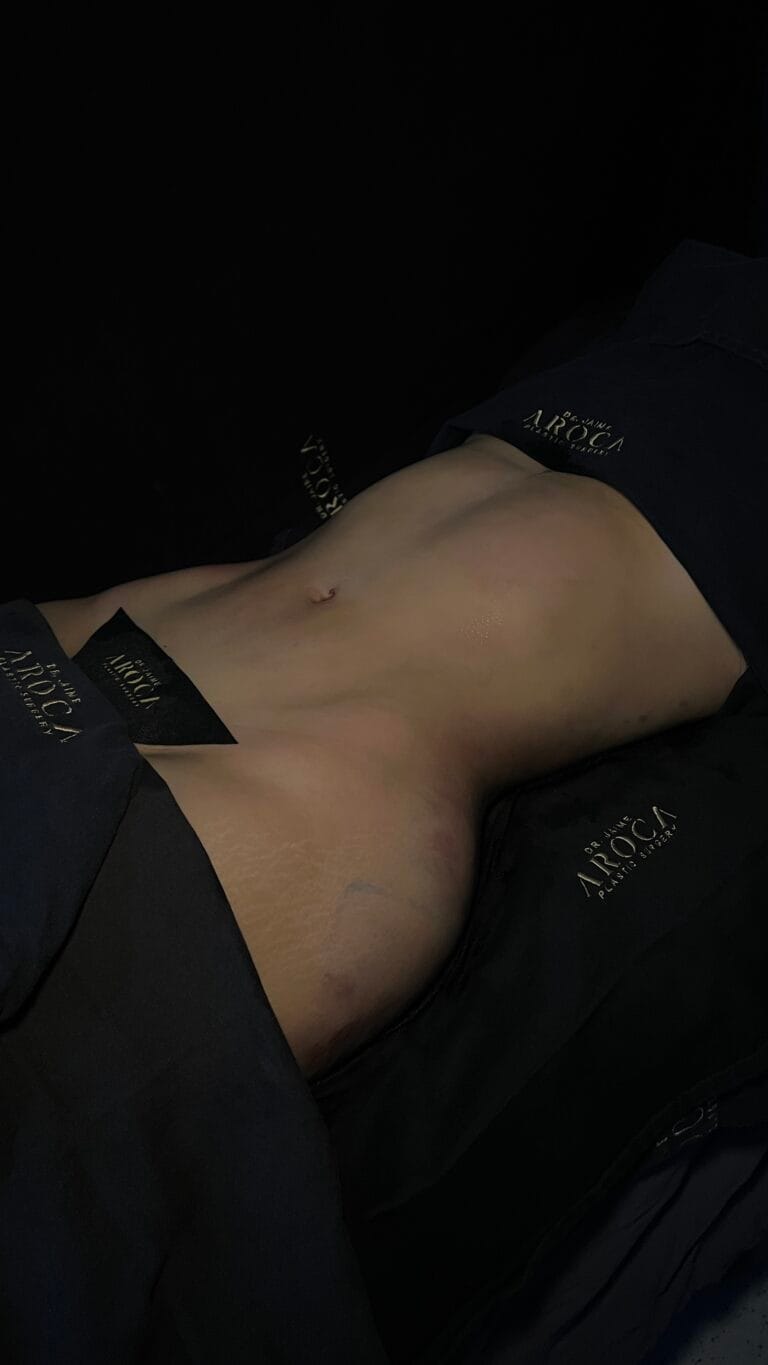
But liposculpture is not just fat transfer. It also includes definition and etching techniques that allow creating visible muscle lines, such as abdominals, obliques, and linea alba. It is body sculpting in the most literal sense of the term.
Key Differences Between Liposuction and Liposculpture
Although they share the same principle, extracting fat, the differences between liposuction and liposculpture lie in the intention, technique, and result:
Procedure Objective
Liposuction seeks to reduce fat accumulations in a localized manner. Its goal is to remove volume, period. Liposculpture, on the other hand, seeks to create a defined, harmonious, and proportioned body contour.
Technique and Precision
In liposculpture, smaller and more controlled cannulas are used that allow working with greater detail without damaging the underlying muscle fibers. Extraction is done strategically, not just aspirating uniformly.
Use of Extracted Fat
In conventional liposuction, the fat is discarded. In liposculpture, it is purified and reinjected into strategic areas: buttocks (BBL), breasts (natural augmentation), or face (rejuvenation). This is called fat transfer and allows creating volume in areas that need it, using the patient’s own autologous tissue.
ArDef Contour: Liposculpture with Advanced Technology
In my practice, I have developed an exclusive technique called ArDef Contour, which is the result of 16 years of technological and clinical evolution. It combines multiple technologies in a single surgical approach to create complete body contours, from abdominal etching to buttock and hip projection.
What makes ArDef Contour different from conventional liposculpture? It is not limited to extracting fat from one area. It works the entire torso circumferentially: abdomen, flanks, waist, back, and when indicated, arms. It is what many call lipo 360, but with an additional component: muscle sculpting and strategic fat redistribution.
The ideal candidates for ArDef Contour are patients with localized fat, good skin tone, and no evident laxity. When there is excess skin or diastasis, the combination with abdominoplasty or the approach changes.
I repeat something I always say: the surgeon takes precedence over all equipment. Technology is an extraordinary tool, but without judgment, experience, and three-dimensional vision of the body, no device produces high-definition results on its own.
Abdominal Etching and Lipo HD
Abdominal etching, or Lipo HD (high definition), is one of the most advanced applications of liposculpture. It consists of sculpting the muscular lines of the abdomen, especially the midline (linea alba) and tendinous inscriptions, to create the appearance of an athletic and defined abdomen.
In my case, I perform what I call UHD Abdominal Vibro-Etching (Ultra High Definition), which takes definition to the highest possible level using vibrolipolysis combined with other tools for millimeter-precision etching.
But there is a criterion that is non-negotiable: for the etching to be visible, the thickness of the adipose panniculus, the subcutaneous fat layer, must be less than 4 cm. If the fatty tissue is excessive, no lines will be seen no matter how much technology is used. This is evaluated in consultation and is one of the most important candidacy filters.
Lipo 360: Comprehensive Torso Treatment
The concept of Lipo 360 refers to treating the torso comprehensively: abdomen, flanks, waist, and lower back, achieving a smooth transition between all areas instead of treating isolated areas that generate disproportionate results.
In my method, although I do not use that specific name, the approach completely coincides: I work the abdomen, sides, waist, and back in a single session, as part of ArDef Contour. What I add is muscle etching and fat transfer, something that is not always included in a conventional lipo 360.
The key to comprehensive treatment is not to aspirate “everywhere,” but to understand how areas relate to each other to achieve proportion. A defined waist without treated flanks can look artificial. Everything has to flow.
Who Are Candidates for Liposculpture?
Not every patient who wants liposculpture is a candidate for it. And saying so honestly is part of my job.
Ideal candidates for liposculpture present:
- Localized fat that does not respond to diet or exercise
- Good skin elasticity and quality
- Musculature in adequate condition (without diastasis)
- Adipose panniculus of moderate thickness (less than 4 cm for etching)
Those who present the following are not candidates:
- Obesity, where excess fat prevents any type of visible etching
- Very loose skin, extreme laxity, or abundant stretch marks that prevent skin retraction
In these cases, the path may be another procedure, such as abdominoplasty, or even a prior physical conditioning plan before considering any surgery.
When Is Abdominoplasty Better Than Liposculpture?
This is another frequent question, especially in post-pregnancy patients or after significant weight loss. And the answer depends on what I find in the evaluation:
Liposculpture works when there is localized fat with good skin and intact musculature. But if I find an abdomen with rectus diastasis (separation of the abdominal muscles), excess hanging skin, or extensive stretch marks, liposculpture alone will not correct that.
In those cases, the indication is an abdominoplasty, in my practice, the ArTummyTech technique, which allows removing excess skin, repairing the muscle wall, and if possible, combining with flank and waist liposculpture in the same surgical time.
Even thin women may need abdominoplasty if they have loose skin or diastasis. It is not a matter of body weight, but of anatomical structure.
Modern Assisted Technologies
Technology has transformed the way we perform liposculpture. But I want to be clear: no equipment replaces the surgeon. Technology amplifies what the surgeon knows how to do; it does not invent skills that do not exist.
Vibrolipolysis and Arotech Platform
Vibrolipolysis uses ultrasonic vibration or micro air equipment that destroys fat cells before extraction, reducing tissue trauma and allowing faster recovery with less pain and bruising.
The Arotech platform is the technological ecosystem that combines these state-of-the-art devices. Its main advantage: achieving a less aggressive procedure without sacrificing the precision needed for etching and body sculpting.
J-Plasma/Renuvion for Skin Retraction
J-Plasma (Renuvion) is a technology I combine with liposculpture to achieve immediate skin retraction after fat extraction. It uses radiofrequency energy plus ionized helium to contract subdermal collagen, resulting in firmer skin that is tighter to the new contour.
That said, J-Plasma does not perform miracles on skin with severe laxity. There are limits, and it is my responsibility to identify them before operating.
Fibrosis and Irregularities: Prevention and Management
Fibrosis is a natural body response to liposuction: the body forms internal scar tissue that can cause lumps, irregularities, or hard areas under the skin. It is one of the most common risks and, in many cases, can be prevented or minimized with proper technique and rigorous postoperative follow-up.
I have documented cases of patients who come to my practice with etchings that look like scars or burns on the skin, the result of poorly executed techniques or equipment used without judgment. That is not lipo HD: it is iatrogenic damage.
Prevention involves several factors: correct technique, appropriate cannulas, use of assisted technology, postoperative massages, use of compression garment, and close follow-up. It is not only what you do in the operating room, but how you manage the postoperative period.
Recovery After Liposculpture
Recovery from liposculpture with ArDef Contour tends to be faster and less painful than that of an abdominoplasty, thanks to technology that reduces surgical trauma. But this does not mean it is a minor procedure: it is still surgery and deserves respect.
In general, for any liposculpture:
- Bruising and swelling can resolve in days to one to two weeks
- The compression garment is a mandatory part of the postoperative protocol
- The final result is visible between 3 and 6 months afterwards
But faster recovery does not mean it is a walk in the park. You are in recovery, not on vacation. Instructions are followed to the letter.
Long-Term Results: What to Expect and How to Maintain Them
The results of liposculpture can be lasting, as long as you maintain a healthy lifestyle: balanced diet, regular exercise, and stable weight. The fat that is removed does not return (the cells are permanently eliminated), but those that remain can expand if you gain weight.
This is something I explain in consultation with complete transparency. Surgery is not permission to abandon healthy habits. It is a starting point that needs maintenance.
Results vary from person to person based on factors such as skin quality, amount of fat treated, genetics, and adherence to the postoperative protocol.
Frequently Asked Questions About Liposculpture vs Liposuction
What is the main difference between liposculpture and liposuction?
Liposuction focuses on extracting localized fat to reduce volume, while liposculpture also redistributes fat through fat transfer and etching techniques to create defined and proportioned body contours.
Is liposculpture useful for weight loss?
No. Neither liposculpture nor liposuction are treatments for obesity. They are designed to treat localized fat resistant to diet and exercise in patients close to their ideal weight. They are body contouring surgeries, not weight loss methods.
What happens to the fat extracted in liposculpture?
The fat is purified and reinjected into strategic areas such as buttocks, breasts, or face, a process known as fat transfer. This allows creating volume in areas that need it using the patient’s own tissue.
Who are ideal candidates for liposculpture?
Ideal candidates have localized fat resistant to diet and exercise, good skin elasticity, musculature without diastasis, and a moderate adipose panniculus. Candidacy is determined in an in-person evaluation with a board-certified plastic surgeon.
How long does recovery take after liposculpture?
Bruising and swelling usually resolve in one to two weeks, and the final result is visible between 3 and 6 months afterwards. Use of a compression garment and following medical instructions are essential for a good recovery.
Can liposculpture eliminate cellulite?
No. Cellulite has a different origin: it is related to the structure of connective tissue, not just fat. There are other treatments specifically targeted at cellulite, but liposculpture is not one of them.