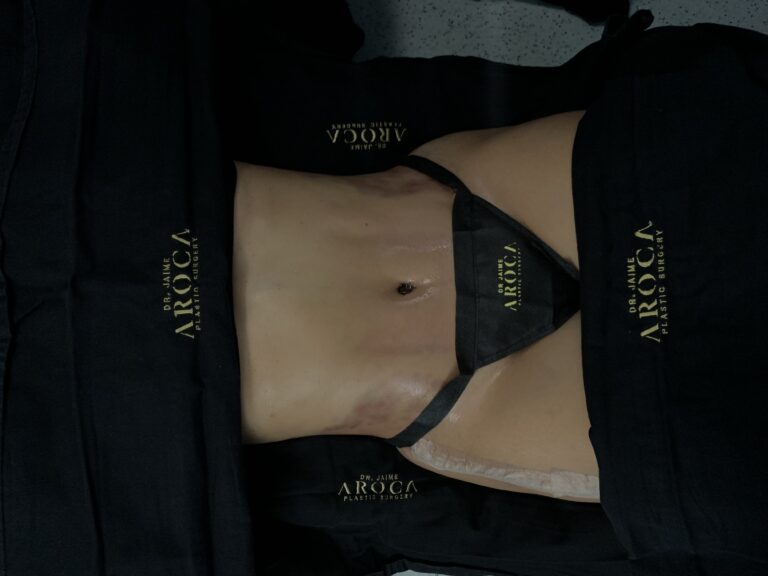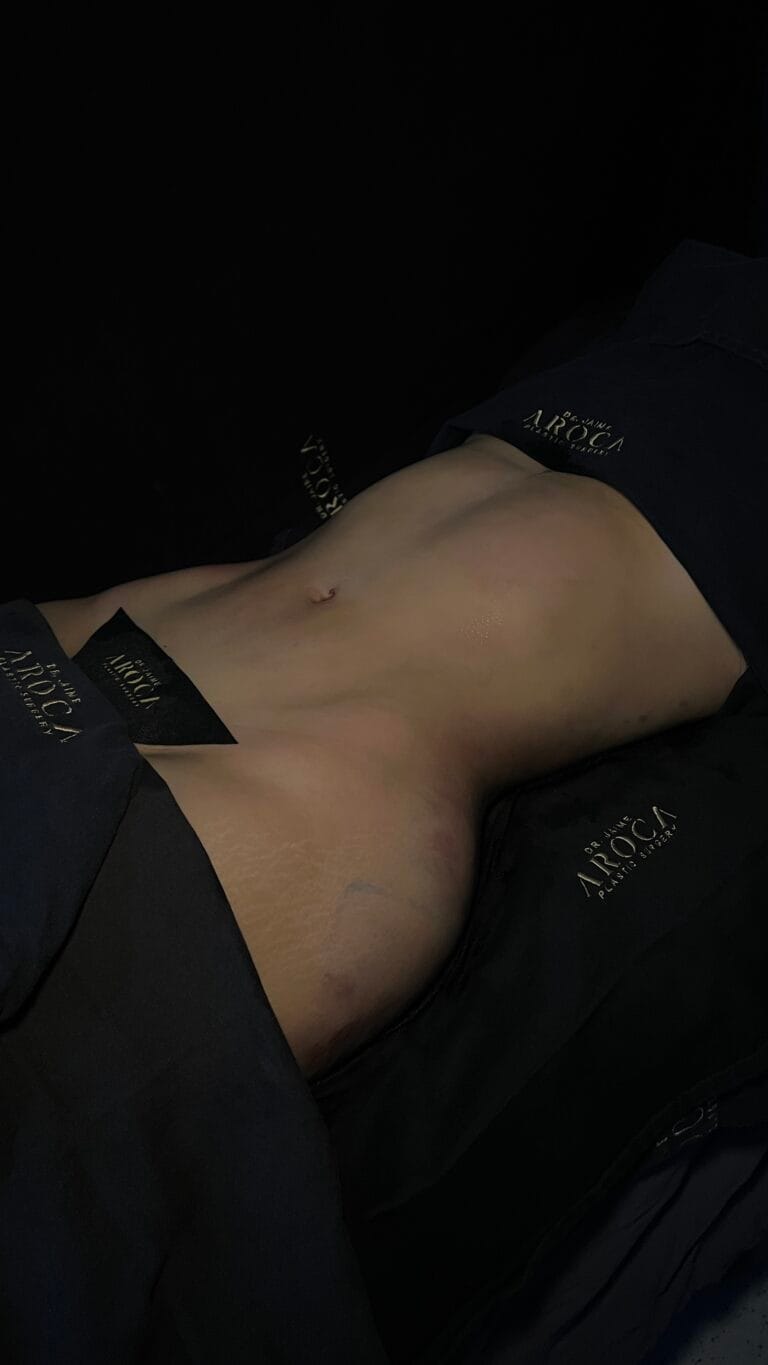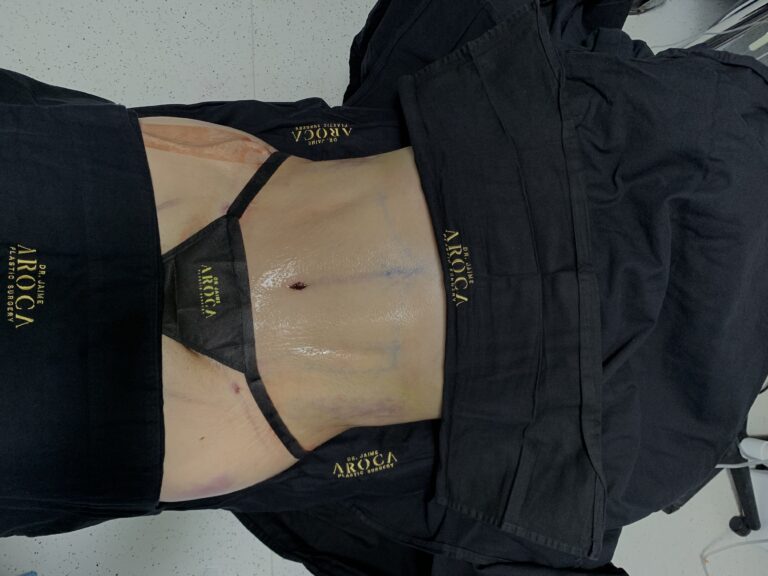

How much does abdominoplasty hurt? That’s probably the question I hear most often in consultations, even before discussing scars, results, or recovery time. And I understand it: pain creates uncertainty, and uncertainty holds back decisions.
Let me be straightforward: abdominoplasty does hurt. I’m not going to sugarcoat it. But the pain is temporary, predictable, and manageable when you know what to expect and follow your doctor’s instructions carefully. In this article, I’ll explain how pain evolves day by day, what factors influence it, how to control it effectively, and most importantly, when discomfort stops being normal and you need to consult your surgeon.
Key Points
How Painful Is an Abdominoplasty: What You Need to Know
Abdominoplasty is a major surgery. It involves removing excess skin, tightening tissues, and in many cases, repairing the abdominal muscle wall. All of this generates an inflammatory response that translates into soreness or tension in the abdominal area during the first few days. This is completely normal.
Now, not all abdominoplasties hurt the same way. There are specific variables that make a difference.
Factors That Influence Pain Level
- Extent of the surgery: A mini abdominoplasty, which addresses only the lower abdomen, is not the same as a complete abdominoplasty with muscle repair and repositioning of the navel. The greater the extension, the more tissue manipulated and the more discomfort.
- Complementary liposuction: When I combine abdominoplasty with liposculpture to define the waist or flanks, the treated areas add to the overall sensitivity. This doesn’t mean it’s unbearable, but it does mean the body has more areas in recovery.
- Individual pain threshold: It varies significantly between patients. What one person describes as moderate discomfort, another perceives as intense pain. There is no universal response.
- Prior physical condition and post-op discipline: A patient who arrives in good health and consistently follows medical instructions tends to recover better.
Abdominoplasty With or Without Muscle Repair
This point deserves its own space because it changes the experience a lot. When there is abdominal diastasis, the separation of the rectus abdominis, something very frequent after pregnancies, the surgery includes muscular plication: basically, I tie and rearrange the muscles in their position.
This generates significant additional tension. The first few days your abdomen will feel hard and tight, as if you had done hundreds of sit-ups. It’s the most uncomfortable phase of the entire recovery. In contrast, if the abdominoplasty only involves skin removal without muscle repair, the discomfort is usually considerably less.
That’s why I always say: the individual assessment defines the surgical plan. Not all patients need the same thing, and this directly impacts the pain they will experience.
Pain Evolution Day by Day and Week by Week
Understanding the pain timeline removes a lot of anxiety. When you know what to expect on a given day or week, you can focus on recovery without worry.
Days 1–3: The Most Intense Phase
This is the most demanding period. Pain can be moderate to severe, especially if there was diastasis repair. You’ll feel tightness, heaviness, and difficulty getting up on your own. The peak pain usually occurs between days 3 and 5.
During this phase, prescribed medication is essential. Don’t try to “tough it out” without it. It’s also normal to feel tingling or intermittent burning: those are the nerves and tissues beginning their healing process.
Days 4–7: Progressive Improvement
Pain begins to subside noticeably. There’s still tightness, especially when trying to stand straight, but the intensity decreases. Many patients are able to transition from strong painkillers to milder medication.
This is the phase where the temptation to “do more” appears. Don’t give in. Rest is still the priority. In my practice, I recommend absolute rest for the first 10 days for a reason: premature tension in the abdominal area can lead to complications.
Weeks 2–3: Transition to Comfort
Pain becomes mild. Discomfort is manageable, sometimes requiring only over-the-counter pain relievers. You start feeling more functional, you can walk more easily, and the tightness becomes a background sensation rather than something that limits you.
Even so: consistency and discipline in follow-up appointments and post-surgical treatments are essential. This is not the time to skip visits.
After the First Month: Residual Discomfort
By weeks 4–6, pain as such should be minimal or absent. What may persist is residual tightness, especially when stretching or making certain movements. This is normal.
One piece of information I share with my patients so that they have realistic expectations: according to a study published in PubMed Central, approximately 8.2% of patients report some degree of pain or sensory disturbance related to surgery beyond the standard recovery period. It’s not the norm, but it does exist. And if it happens to you, it needs to be evaluated.
A Safe Process from Start to Finish
“Every surgery begins long before the operating room. Proper preparation and a rigorous assessment are the foundation of a successful and safe result.”


How to Manage Pain Effectively
Pain is not something you “endure.” It’s managed with a clear plan. Here’s what works.
Medications and Their Proper Use
The medical team prescribes specific analgesics for the first few days, generally stronger medication that is then transitioned to options such as acetaminophen or anti-inflammatories. The key is to take them as directed, on the established schedule — not when pain has already become unbearable.
Do not self-medicate. Do not take anti-inflammatories or anticoagulants that have not been authorized by your surgeon. This is non-negotiable.
Non-Pharmacological Alternatives to Relieve Pain
- Gentle walks: From day 1, walking slowly inside your home helps circulation and reduces the risk of complications such as thrombosis. We are not talking about exercise; it’s basic movement.
- Proper hydration: It sounds simple, but staying well hydrated promotes tissue recovery.
- Breathing techniques: Controlled, gentle breathing helps relax the abdominal muscles and manage pain peaks.
In my team we also have cosmeticians that apply post-surgical recovery therapies. It is all part of a comprehensive care protocol.
Using the Compression Garment as Support
The garment is not an accessory: it’s part of the treatment. It serves a real function: it supports the abdomen, reduces inflammation, and decreases tension on the sutures. Many patients report feeling more discomfort without it, and less when wearing it.
The compression garment should be worn 24 hours a day for the first few weeks. It is not optional. According to sources such as WebMD, post-surgical compression garments are a standard part of recovery management in body contouring surgeries.
Sleeping Position and Rest
Sleeping on your back in a semi-reclined position, at about 30–45 degrees, significantly reduces tension on the sutures and the repaired area. It’s uncomfortable at first, but it makes a real difference in pain levels. You can use pillows under your knees and behind your back to find a tolerable position.
Avoid sleeping on your side or face down during the first few weeks. And don’t try to sleep completely flat: the abdominal tension will wake you up.
Abdominal Swelling and Tightness: Why Your Abdomen Feels Tight
Beyond pain, swelling creates a sensation that worries many patients: the abdomen feels hard, bloated, and tight. Sometimes even more swollen than before surgery. And this generates anxiety.
Why Your Abdomen Feels Hard and Tight
It’s the body’s natural inflammatory response. When there is skin incision, muscle repair, and tissue manipulation, the body sends fluid and repair cells to the area. This generates edema (swelling). Added to this is the mechanical tension of the repositioned skin and the approximated muscles.
This process is temporary. As the days go by, inflammation gradually subsides. But it can take weeks, even months, to reach the final result. Don’t judge your results in the first few weeks.
It is important to know that the liposculpture has a faster and less painful recovery than the abdominoplasty, precisely because it does not involve cutting of the skin or muscle tie-up. They are different procedures with different levels of invasiveness, and this is reflected in the postoperative experience.
How to Reduce Post-Operative Inflammation
- Constant compression garment: I’ve already mentioned it, but I insist: it’s the number one resource.
- Gentle and progressive walks: Movement helps lymphatic drainage.
- Avoid excess salt and stay hydrated: It sounds basic, but it makes a difference.
- Follow the indicated postoperative treatments to the letter: According to sources such as the Mayo Clinic, compliance with postoperative indications is one of the most important factors in the quality of recovery.
- Don’t skip follow-up appointments: At each visit we assess how inflammation is evolving and adjust instructions as needed.
The first essential key to a successful recovery lies in following a specific set of care instructions to the letter. Discipline and punctuality in treatments and follow-up appointments. No exceptions.La primera clave esencial para una recuperación exitosa radica en seguir al pie de la letra una serie de cuidados específicos. Disciplina y puntualidad en tratamientos y controles. Sin excepciones.
Coming from Abroad? We Accompany You Throughout
We offer medical tourism packages with full support: virtual consultation, surgery in an accredited clinic, and remote follow-up after your return home.
Conclusión
Pain after abdominoplasty is real, but it’s predictable and manageable. It has a peak, a clear downward curve, and a point where it practically disappears. What makes the difference between a calm recovery and one full of anxiety is information and discipline.
If you’re considering an abdominoplasty, the most important thing is to come to your consultation with clear expectations, understand your specific case, and commit to the post-operative care. Results vary depending on your anatomy, the type of procedure, and your adherence to the care plan. That’s why the individual assessment is where everything begins: there we define whether you’re a candidate, what the right approach is for you, and what you can realistically expect.
Frequently Asked Questions About Abdominoplasty and Pain
We address the most common questions from our patients to help you make an informed and safe decision.