
If you are researching abdominoplasty, you have probably already read about the horizontal scar, recovery, and muscle repair. But there is a detail that many patients only think about when they see postoperative photos: the navel. What happens to it? Is it removed? Does it look natural?
I will tell you clearly: the navel in an abdominoplasty is the surgeon’s signature. Your navel reveals whether the technique was meticulous or rushed. And in this article, I want to explain exactly how it is reconstructed, what to expect, and how to take care of it.
Key Points
- The navel in an abdominoplasty is not removed: the original umbilical stalk is preserved and repositioned in the new skin, creating a natural-looking neoumbilicus.
- A well-reconstructed navel should have a vertical or oval shape, adequate depth, smooth capuche (hood), and no visible scarring that betrays the surgery.
- The periumbilical scar takes between 6 and 18 months to fully mature, so patience and disciplined care are essential for an optimal final result.
- During the postoperative period, clean the navel with saline solution, keep it dry, use the compression garment as instructed, and report any signs of redness, discharge, or unusual odor immediately.
- Factors such as smoking, diabetes, and a BMI over 30 increase the risk of umbilical complications such as partial necrosis, dehiscence, or hypertrophic scarring.
- It is possible to correct umbilical hernias during the same abdominoplasty, integrating the repair into the procedure without requiring additional surgery.
Why Is the Navel Reconstructed in an Abdominoplasty?
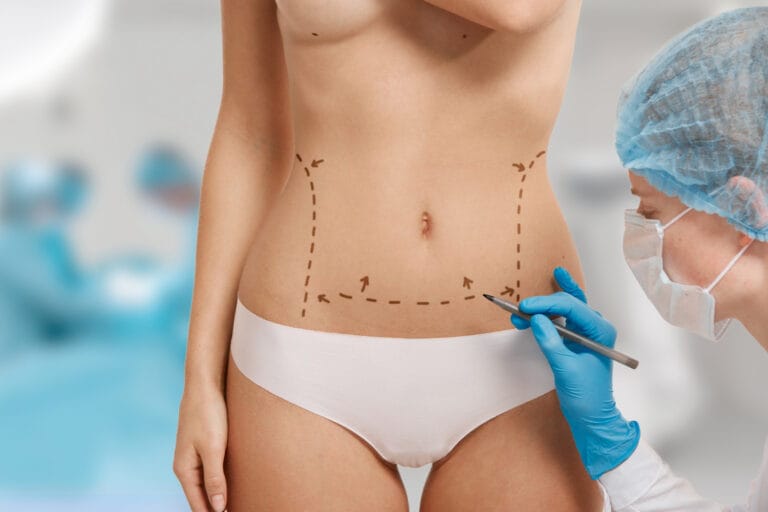
Abdominoplasty involves removing excess skin from the abdomen, tightening the tissues, and in most cases, repositioning the navel. This last step is crucial because when the skin is pulled down and the excess is removed, the navel gets buried under the new skin layer. It needs to be brought out and placed in its correct position.
The original navel is not removed. What I do is preserve the umbilical stalk, which is attached to the deep fascia of the abdominal muscles, and reposition it through a new opening in the tensed skin. The result is a neoumbilicus: a navel that looks natural, centered, and proportioned.
And why does it matter so much? Because the navel is a visual reference point of the abdomen. A poorly positioned, too large, too flat, or asymmetric navel can ruin an otherwise excellent abdominoplasty result. It is the detail that makes the difference between a result that looks surgical and one that looks natural.
Additionally, in many patients, especially after pregnancies, the navel arrives with pre-existing changes: umbilical hernia, dilation, horizontal deformation, or excess periumbilical skin. During the abdominoplasty, these issues are corrected simultaneously.
In the case of a mini abdominal dermolipectomy, which focuses on tightening the lower part of the abdomen without repositioning the navel, this reconstruction is not necessary. But in a complete abdominoplasty, it is an integral step.
How Is the Navel Reconstructed During Surgery?
This is the technical moment that makes the difference between a correct result and an exceptional one. And it is here where experience and aesthetic criteria of the surgeon really count.
During the abdominoplasty, once the excess skin has been removed and the skin flap has been tensed, the point where the new navel should emerge is precisely marked. A small incision is made in the skin, the umbilical stalk is brought through, and it is sutured with a technique that ensures depth, shape, and natural position.
In the scientific literature, there are several documented neoumbilicoplasty techniques:
- Diamond technique: A diamond-shaped incision is made to create a neoumbilicus with natural depth and shape. It produces reproducible results and controlled scarring.
- X incision (neo-omphaloplasty): Creates four flaps that allow giving depth and natural shape to the navel. Its scar tends to be discreet when executed well.
- Tongue-and-groove: Considered ideal for achieving the “teardrop” or vertical shape, which is the most natural-looking. One of the most valued in the aesthetic literature.
- MUC (Marking-Undermining-Closure): A standardized three-step method that seeks reproducible and aesthetically consistent results.
What all these techniques share is the fundamental principle: the navel must have depth, a capuche (a small fold of skin on the upper edge), and a vertical or slightly oval shape. A round, flat, or scar-like navel betrays the surgery.
During the procedure, deep sutures fix the umbilical stalk to the fascia of the rectus abdominis muscles. This prevents the navel from migrating or losing position during recovery. Then the skin edges are sutured with fine technique to minimize the visible scar.
How Does the Navel Look After Abdominoplasty?
This is probably the question I hear most in consultations. And it is understandable: no one wants a navel that looks artificial or that reveals surgery.
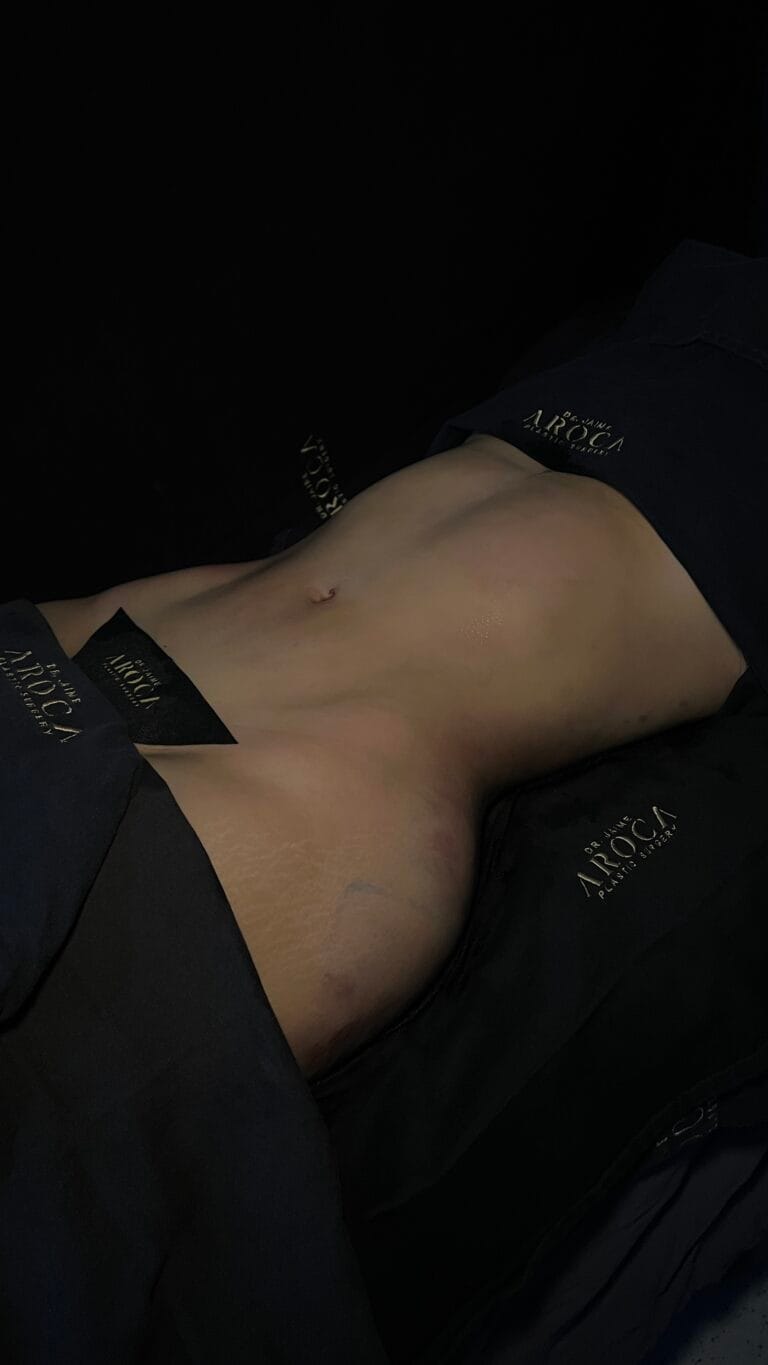
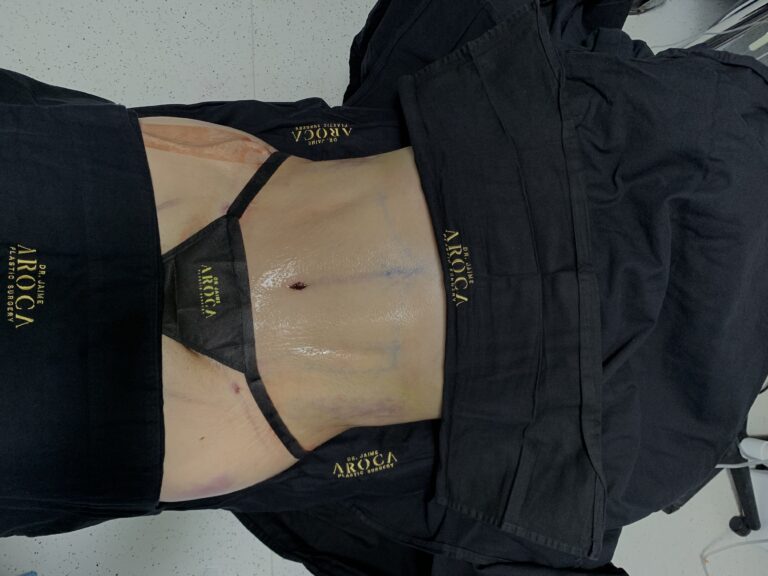
When the reconstruction is done with proper technique, the navel ends up with a natural depression, centered on the midline, with adequate depth and a capuche that gives it a youthful appearance. It looks like a natural navel, not a surgical hole.
Now, I have to be honest with you: the immediate result is not the definitive one. In the first weeks, the navel will be swollen, the skin around it will be tight, and the scar will be visible. This is normal and part of the healing process.
The periumbilical scar matures between 6 and 18 months after surgery. This means that the final appearance of the navel will take time to settle. During that period, the scar goes from pink/red to a tone similar to the surrounding skin.
With proper techniques, the literature reports that up to 96% of patients do not present significant complications with the navel in abdominoplasty. The key is meticulous technique, appropriate postoperative care, and realistic patient expectations.
Navel Care After Abdominoplasty
The postoperative period is where you take control. I do my work in the operating room: afterwards, a significant part of the result depends on how you take care of yourself.
First Weeks
During the first 10 days, the indication is absolute rest: do not lift heavy objects, do not bend over, do not exert yourself. The compression garment is used 24 hours a day.
For the navel specifically, scientific evidence recommends:
- Gentle cleaning with saline solution or sterile water during the first 2 weeks. No alcohol, no hydrogen peroxide, no homemade remedies.
- Keep it dry: after cleaning, dry carefully. Moisture promotes infections, especially in the deeper area of the navel.
- Do not touch or manipulate: avoid scratching or pressing the area, even if you feel itching (which is normal during healing).
- Compression garment: its use is part of the general recovery protocol and helps maintain the navel in the correct position while the deep sutures do their work.
In my practice, cosmetic aestheticians are a fundamental part of postoperative recovery. They assist with wound care, lymphatic drainage massages, and personalized follow-up of the healing process.
Signs of alarm that you should report immediately: excessive redness around the navel, purulent discharge, unusual odor, temperature increase in the area, or pain that does not subside with the prescribed analgesic.
Month 1 to 3
From the first month, the navel scar begins to settle. The care changes to a maintenance and optimization phase:
- Strict sun protection: avoid direct sun exposure for 6 to 12 months to prevent hyperpigmentation. Use sunscreen on the area if it will be exposed.
- Skin hydration: creams or oils recommended by your surgeon to maintain elasticity and promote proper healing.
- Gradual return to activity: you can start walking more, resume light activities, but intense exercise is not authorized until the surgeon gives the green light (usually 6 to 8 weeks).
- Scar massages: when your surgeon authorizes them, gentle massages can help soften the scar and prevent adhesions.
Navel Scar: Evolution and Management
The abdominoplasty scar around the navel is inevitable. But with proper management, it can become practically imperceptible.
This is how it typically evolves:
- Weeks 1-4: The periumbilical scar looks pink or reddish, slightly raised. There is swelling and the area feels tight. This is normal.
- Months 2-6: The remodeling phase begins. The scar loses thickness, flattens, and the color starts to approach the surrounding skin.
- Months 6-18: The scar reaches its final maturity. Ideally, it ends up as a thin, discreet line within the natural crease of the navel.
For active scar management, depending on each case, silicone sheets or gels, scar creams recommended by the surgeon, and pulsed dye laser for persistent scars can be used.
And there is something I cannot stop repeating: do not expose the scar to the sun. Ultraviolet radiation permanently darkens healing scars. Six months of sun protection can mean the difference between a visible scar and one that blends with your skin.
What Can Be Different with the Navel?
I am not going to sell you fantasies. As in all surgery, there are risks, and it is my responsibility to inform you about them so you can make an informed decision.
The most frequent complications related to the navel in abdominoplasty include:
- Partial necrosis of the umbilical flap: tissue loss due to lack of blood supply. It can occur especially in smokers or patients with risk factors.
- Periumbilical dehiscence: partial separation of the wound around the navel, requiring local care and possible revision.
- Umbilical stalk stenosis: narrowing that can affect the final shape.
- Asymmetric position: if the navel is not centered, the visual effect is immediate.
- Hypertrophic scar: exaggerated thickening of the scar that does not mature normally.
The risk factors that increase the probability of these complications are well documented: smoking, diabetes, BMI over 30, and previous abdominal surgeries that compromise blood supply.
It is also worth mentioning seroma, which is an accumulation of fluid under the skin. Although it is not specific to the navel, it can affect the area and requires drainage and follow-up.
Individual evaluation defines candidacy and plan. Each abdomen is different, skin quality varies, and the history of previous pregnancies or surgeries directly influences what can be achieved.
Frequently Asked Questions About the Navel in Abdominoplasty
Is the navel removed during an abdominoplasty?
No, the navel is not removed. During abdominoplasty, the original umbilical stalk is preserved and repositioned through a new opening in the tensed skin, creating a neoumbilicus with a natural appearance.
How is the navel reconstructed in an abdominoplasty and what techniques exist?
The umbilical stalk is preserved and fixed with deep sutures to the fascia of the rectus abdominis muscles. Then it is sutured through a new opening with techniques that seek a natural shape. Documented techniques include the diamond, X incision, tongue-and-groove, and MUC.
How long does the navel take to heal after abdominoplasty?
The periumbilical scar matures between 6 and 18 months after surgery. In the first weeks, it appears pink and swollen, and progressively evolves until reaching its final tone, which ideally blends with the surrounding skin.
What are the care instructions for the navel after abdominoplasty?
During the first weeks, clean with saline solution, keep the area dry, avoid manipulating or scratching, and use the compression garment continuously. From the first month, add sun protection, skin hydration, and scar massages when authorized.
Is it normal to feel pain or sensitivity changes in the navel after surgery?
Yes, it is common to experience sensitivity changes, itching, or mild discomfort in the area during the first weeks and months. These symptoms are part of the normal healing process and usually resolve over time.
What complications can occur with the navel in abdominoplasty?
Possible complications include partial necrosis of the umbilical flap, periumbilical dehiscence, stalk stenosis, asymmetric position, and hypertrophic scarring. Risk factors such as smoking, diabetes, and high BMI increase the probability of these issues.