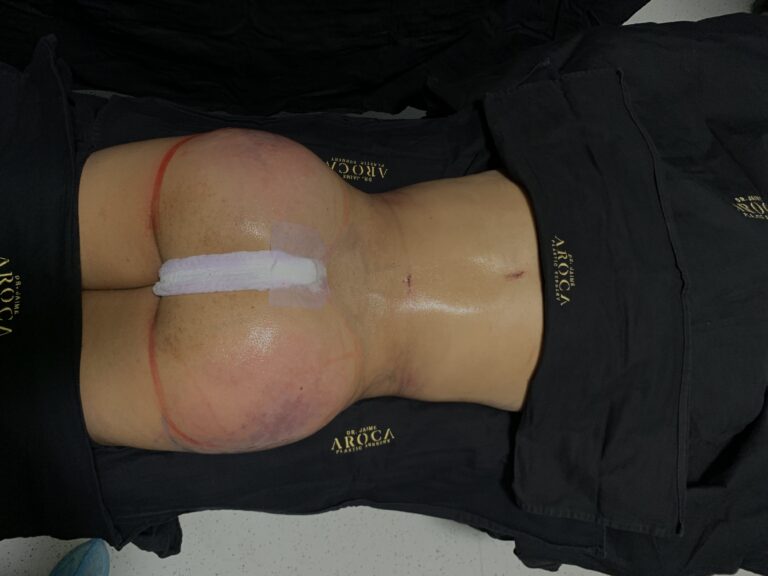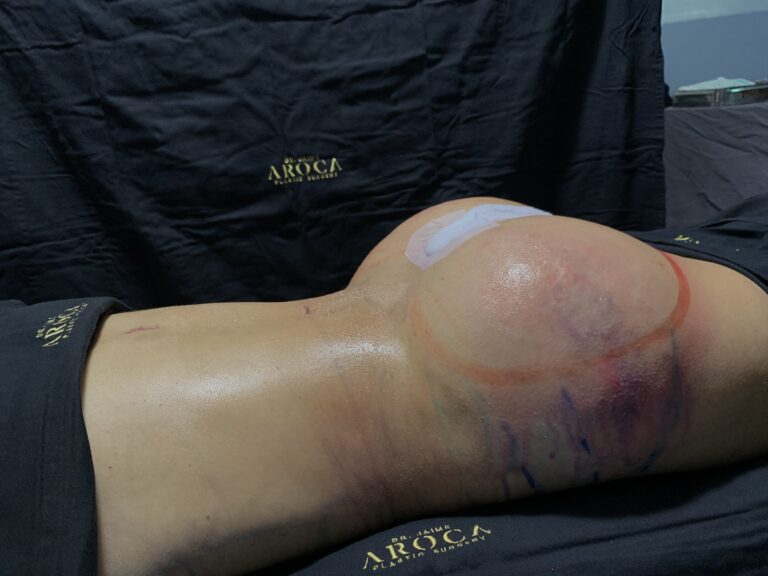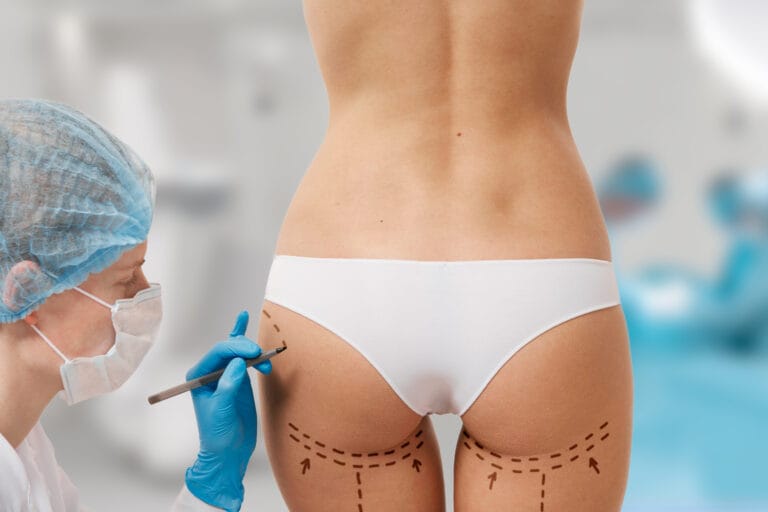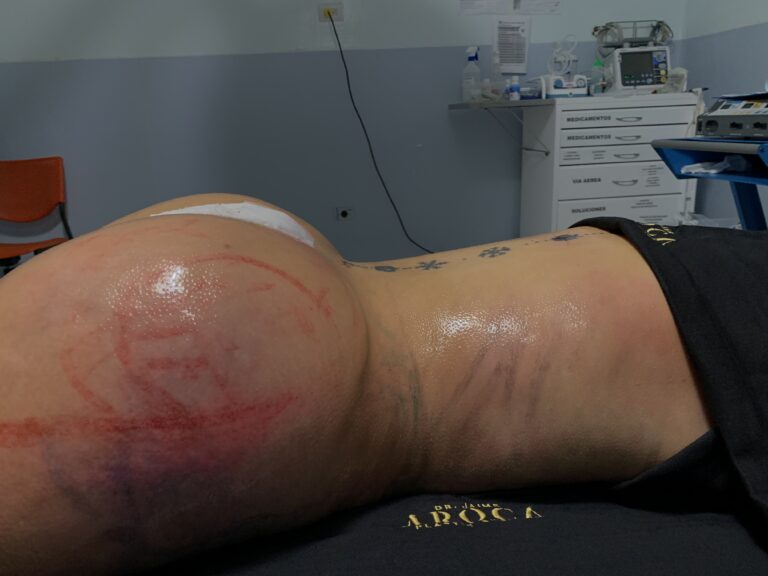

Anyone looking for information about the risks of gluteal fat transfer usually arrives in one of two ways. Either they’re excited and want confirmation that everything will go well, or they typed “fat transfer is dangerous” into a search engine after reading something that scared them, and need to know if they should cancel. Both positions have something in common: honest information is missing in between.
Gluteal fat transfer, popularly known as BBL, has changed a lot in recent years. Risk figures have dropped, the technique has been refined, and protocols have become stricter. But no surgery is risk-free, and this one in particular requires understanding why the buttock is an area that demands absolute anatomical respect.
What follows is not a catalog of horrors. It’s a risk management guide, so you arrive at your consultation with the right questions and your own judgment to evaluate the answers you receive.
Key Points
Is buttock fat transfer dangerous? What the current evidence says
Before 2017, the estimated mortality rate for gluteal fat grafting was around 1 in 3,000 procedures. Statistically speaking, it was the cosmetic surgery with the highest reported mortality rate. That fact is true and explains much of the fear that still persists.
But that data is from nearly a decade ago, and the factors behind it have changed since then.
Following the recommendations of the ASERF Gluteal Fat Grafting Task Force, a follow-up survey of ASAPS and ISAPS members found that mortality showed a downward trend: from 1 in 3,448 in 2017 to 1 in 14,952 in 2019. The incidence of pulmonary fat embolism decreased during the same period from 1 in 1,030 to 1 in 2,492 (p = 0.02). Interestingly, it is possible to trace what caused this decline:
| Surgical practice | 2017 | 2019 |
| Surgeons who injected into deep muscle | 13,1% | 0,8% |
| Surgeons who used cannulas measuring 4.1 mm or more | 4,1% | 29,8% |
| Surgeons who angled the cannula downward | 27,2% | 4% |
All those changes were statistically significant (p < 0.01). 94% of those surveyed knew the recommendations. They changed their technique, and the incidence dropped.
The BAAPS 2023 safety review reached a similar conclusion: the mortality risk, previously reported as 1:2,500, is now estimated to be closer to 1:15,000, a figure similar to that of an abdominoplasty. A comparative study confirmed that equivalence with an important nuance: the nature of that mortality is different. In abdominoplasty, deep vein thrombosis predominates; here, it’s pulmonary fat embolism. And unlike thrombotic risk, fat embolism has enormous potential for reduction through technique and anatomy.
The procedure is not “dangerous” or “safe” in the abstract. Its risk profile depends on specific decisions that someone makes before and during the surgery.
If you’re still not clear on what it involves, first check out what gluteal fat transfer is and how it works. Here I focus on the risk and how it’s managed.
A Safe Process from Start to Finish
“Every surgery begins long before the operating room. Proper preparation and a rigorous assessment are the foundation of a successful and safe result.”


Why the buttock is a particularly high-risk area
The gluteus maximus muscle is not an inert block of tissue. It is crossed by large-caliber veins, the superior and inferior gluteal veins, which drain directly into the central circulation and from there to the heart and lungs.
That caliber is the problem. When a cannula injures one of those vessels while injecting fat under pressure, the fatty material can enter the venous bloodstream. It doesn’t take much: a fat globule larger than one centimeter that reaches the pulmonary circulation can cause cardiopulmonary collapse within minutes.
In the subcutaneous tissue, above the gluteal fascia, there are no vessels of that caliber.
That’s the whole difference.
The injection plane: the technical decision that changed BBL safety
If I had to reduce this article to a single idea, it would be this. The plane where the fat is deposited is the variable that most determines whether the surgery is reasonably safe or the deadliest in aesthetic surgery.
What happens when fat enters the intramuscular plane
The evidence converges from three different types of studies, which is uncommon and therefore worth pausing on.
The surveys. A survey of 853 board-certified plastic surgeons from the Brazilian Society of Plastic Surgery found an estimated mortality of 1 in 20,117 cases and a non-fatal fat embolism rate of 1 in 9,530. But the decisive finding was different: the risk of death was 16 times higher when the fat was injected intramuscularly.
The meta-analyses. A systematic review of 27 studies with 208,692 observations calculated, for intramuscular fat grafting, a fat embolism mortality rate of 1 in 3,000 cases. That’s almost the same alarming figure from 2017, which suggests that statistic reflected a practice that was already mostly intramuscular.
Forensic evidence. An analysis of 11 post-BBL autopsies in South Florida, involving 22 dissected gluteal halves, found that absolutely all cases of pulmonary fat embolism involved fat injected into the gluteal muscles at various levels. Without exception.
When surveys, meta-analyses, and autopsies all point to the same conclusion, it is no longer just a surgical school’s opinion.
What Do Scientific Societies Recommend Today?
The joint safety statement issued by ASPS, The Plastic Surgery Foundation, The Aesthetic Society, and ASERF stipulates that fat should be injected only into the subcutaneous space, above the gluteal fascia, and calls on regulatory agencies to make this requirement a standard.
The Practice Advisory from the Multi-Society Task Force for Safety in Gluteal Fat Grafting adds two revealing recommendations. The first is technical: use ultrasound to document the cannula’s position before and during injection, because uncertainty about the correct plane is in itself a likely cause of mortality. The second is not technical at all: limit the number of BBL procedures to a maximum of three per operating room day, because in Florida, most deaths from this procedure occur toward the end of the week. The task force included surgeon fatigue and distraction as formal risk factors.
Translated with DeepL.com (free version)
Think about it for a moment. The safety recommendation isn’t just about where to place the cannula. It’s about how many surgeries the person holding it performs each day.
Are results compromised by injecting only subcutaneously?
For years, this was the argument in favor of the intramuscular technique: that the safe site resulted in lower volume and less retention, and that it was therefore worth taking the risk.
The evidence disproved it.
A prospective study published in *Plastic and Reconstructive Surgery* followed 50 consecutive patients who underwent surgery exclusively in the subcutaneous plane, measuring the thickness of gluteal adipose tissue by ultrasound before surgery, immediately afterward, and at 12 months. The mean immediate increase was 56.51%, and at 12 months, that thickness had decreased by an average of 18.16%. The authors’ conclusion was clear: exclusively subcutaneous grafting is as effective as previous studies of intramuscular injection in terms of long-term fat retention. A prospective study published in *Plastic and Reconstructive Surgery* followed 50 consecutive patients who underwent exclusively subcutaneous surgery, measuring the thickness of gluteal adipose tissue by ultrasound before surgery, immediately afterward, and at 12 months. The average immediate increase was 56.51%, and at 12 months, that thickness had decreased by an average of 18.16%. The authors’ conclusion was clear: exclusively subcutaneous grafting is as effective as previous studies of intramuscular injection in terms of long-term fat retention.
A meta-analysis of 38 studies involving 22,151 patients confirmed this in terms of complications: the subcutaneous-only approach showed the lowest rates compared with the intramuscular and combined approaches. Furthermore, a consecutive series of 7,000 procedures performed under a strict subcutaneous protocol reported no cases of pulmonary fat embolism or thromboembolic events.
You don’t have to choose between safety and results. That dilemma never really existed.
In my work, I combine lipolysis of the mid-back, lower back, and waist with fat transfer to the lateral, upper, and mid-gluteal regions. The goal isn’t simply to add volume; it’s to achieve definition and differentiation between the lower back and the glutes. The aim is to transform a silhouette that is wider at the top and narrower at the bottom into the opposite. Before surgery, in many cases it’s unclear where the back ends and the buttocks begin, and that is precisely the problem to be solved. All of this is achieved by working in the subcutaneous layer.
Fat Embolism: What It Is and How to Recognize It Early
Fat embolism occurs when fat globules enter the bloodstream and block blood vessels, most commonly in the lungs. There are two forms: the macroscopic form, in which large globules cause direct mechanical obstruction, and the microscopic form, which behaves more like a systemic inflammatory syndrome. A review of 172 reported cases notes that mixed presentations exist and that diagnosis requires clinical evaluation, imaging, and histopathology.
When discussing severity, it is important to be precise and not to exaggerate. A systematic review of 137 patients described the most common signs: ocular signs in 50.8% of cases, neurological signs in 42.2%, and cardiopulmonary signs in 32.0%. The mortality rate among these published cases was 34.3%.
With one clarification that many texts omit: that figure refers to cases reported in the literature, not to a population-based rate, and the cases that are published tend to be the most severe. The probability of it occurring is what we saw earlier; this figure describes how serious it is when it does occur.
When do the symptoms appear?
The window of opportunity is narrow, and knowing it saves lives.
A review of 38 patients with pulmonary fat embolism from 20 countries found that in 76% of cases, symptoms began within the first 24 hours after surgery, and that all of the patients who died did so within the following five days. The earlier the onset, the more severe the clinical course. There is also some good news in these findings: if a person survives the initial episode without permanent sequelae, a full recovery can be expected.
That’s why immediate postoperative monitoring isn’t just a formality. If you want to know in detail what to watch for after surgery and when to call, check out the guide to warning signs after a BBL.
Symptoms of Fat Necrosis in the Buttocks: How to Recognize It and What to Do
This is probably the complication that leads to the most inquiries. Unlike fat embolism, it is relatively common and occurs when the patient is already at home, alone with her own body, unsure whether what she feels is normal.
What Is Fat Necrosis and Why Does It Occur?
When fat is grafted into an area, those cells need the recipient tissue to provide them with blood supply during the first few days in order to survive. If part of the graft does not receive enough blood supply, those cells die. This is known as fat necrosis.
In most cases, it is not life-threatening. What it does is alter the outcome: it causes palpable nodules, oil cysts (encapsulated collections of liquefied fat), areas of pain, or irregularities in the contour.
The most important factor is volume, and it’s important to understand why. More fat does not mean better results: if the recipient tissue is saturated with more fat than it can supply with blood, the proportion of cells that do not survive increases, and it also forces the injection pressure to rise—which is precisely what pushes material into the blood vessels. Volume is not an aesthetic variable. It is a safety variable.
Other factors that play a role include the distribution of the graft, sustained compression on the area, and patient-related factors such as smoking, which impairs microcirculation.
The figures vary widely depending on the technique, and this variation is informative. The series of 7,000 patients following a strict subcutaneous protocol reported fat necrosis in 1.9% of cases. The meta-analysis of ultrasound-guided grafting, involving 6,235 patients, reported 0.09 per 100. The difference says more about technique and volume than about luck.
How to Distinguish a Normal Healing Nodule from Fat Necrosis
After a fat transfer, it is completely normal to feel firm, uneven areas for several weeks. Swelling and scar tissue cause this sensation. Not every lump is necrosis.
| Feature | Scar nodule | Necrosis grasa |
| Size | Small and stable, or declining | It can grow over time |
| Consistency | Firm, but yields to pressure | Hard, sometimes with a fluctuating sensation |
| Pain | Minimal or absent; it is gradually decreasing | It can be intense or gradual |
| Skin on top | Of normal appearance | Reddened, hot, or discolored |
| Evolution | It stabilizes and softens within weeks | It may become inflamed, drain fluid, or become infected |
The rule of thumb is simple: anything that improves over time is usually just healing; anything that gets worse, grows, hurts more each day, or changes the color of the skin requires evaluation. If you also develop a fever or notice discharge from the skin, you should see a doctor immediately—there’s no time to wait.
What should be done when fatty necrosis is confirmed?
Management depends on the extent of the condition and when it is detected. Small nodules often resolve on their own over several months and require only follow-up. Oil cysts may need to be aspirated. When there is a secondary infection, it is treated with antibiotics and drainage. In extensive cases, resection of nonviable tissue and, later, contour correction may be required.
Ultrasound is very helpful here, because it allows us to distinguish between an area of fibrosis and a fluid collection and to make an informed decision rather than relying on palpation. Outcomes improve in almost all cases when the condition is detected early.
Other risks you should be aware of
In addition to fat embolism and necrosis, there is a group of complications that are much more common and much less serious. It is important to be aware of them so as not to mistake a predictable setback for an emergency.
| Complication | Reported incidence | Source |
| Seroma | 2.03% to 23%, depending on the series | 2026 Meta-Analysis and Series of 7,000 |
| Contour Irregularities | 2,29% | Meta-analysis, 22,151 patients |
| Infection | 0,23% a 0,43% | Ultrasound meta-analysis and a series of 7,000 |
| Asymmetry | 0,29% | A series of 7,000 patients |
| Hematoma | 0,14% | A series of 7,000 patients |
| Pulmonary Embolism | 0,04% | Meta-Analysis 2026 |
Seroma is by far the most common complication, and the wide variation across studies primarily reflects differences in how it is defined and actively sought, rather than an actual difference in risk of that magnitude.
A counterintuitive finding: the use of additives in liposuction fluid and the placement of drains did not consistently reduce complications, and in some cases were associated with worse outcomes. More intervention does not always mean greater safety.
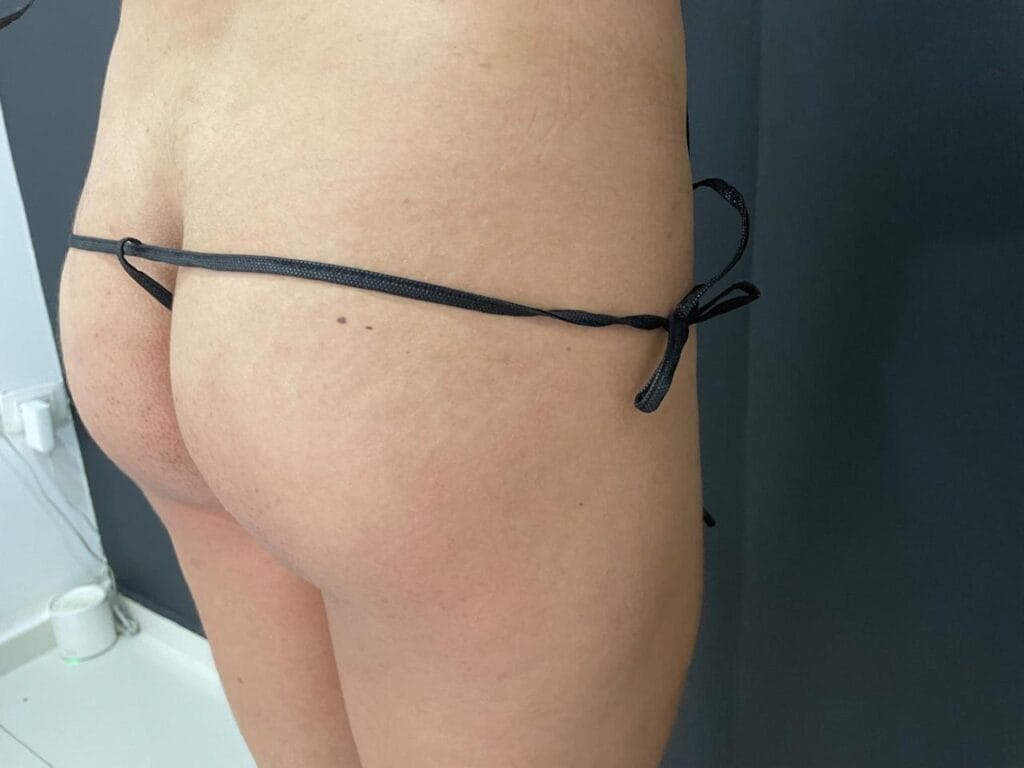
Coming from Abroad? We Accompany You Throughout
We offer medical tourism packages with full support: virtual consultation, surgery in an accredited clinic, and remote follow-up after your return home.
Patient Selection: Why “No” Is Sometimes the Right Answer
Here we get to the part that is least discussed in articles on this topic, and which for me is the most important.
Not everything that can be done should be done in plastic surgery.
I say this with conviction, because as surgeons not everything we are asked to do is something we can or should do. Our priority must always be the patient’s health. That’s why, sometimes, the answer is no.
I remember a particular case: a patient who insisted on having surgery despite having underlying medical conditions that put her life at risk. She told us it didn’t matter what it took to make it happen. But our protocols are clear: if there is a high risk to her wellbeing or health, we don’t do it. Although it wasn’t easy for her to hear that no, it was the most ethical and safest decision.
That no protects more than any technology in the operating room.
Factors I evaluate before deciding whether to operate
None of these points is an automatic checklist. Each one is weighed within the context of the person:
- Insufficient fat reserve. Without an adequate donor area there is no material to graft, and forcing it leads to poor results and more trauma to the tissue.
- Body weight outside the range in which surgery is reasonably safe. A high body mass index increases anesthetic and thromboembolic risk, and prior work-up is usually advisable before operating.
- Active smoking. It compromises microcirculation and wound healing, and increases the likelihood that the graft will not survive.
- Uncontrolled chronic illnesses, coagulation disorders, or significant anemia.
- History of thrombosis or unevaluated thromboembolic risk factors.
- Expectations that no surgery can meet, or motivation that doesn’t come from the person but from external pressure.
I want to pause on this last point. Plastic surgery should help you look better, yes, but above all to feel good about yourself: to build, not to destroy; to add, not to risk your life. When motivation drifts away from physical or emotional wellbeing, an honest conversation is more useful than the operating room.
The risk that accumulates with each repeat surgery
Surgery should not be treated as if it were a routine act, like going to the hairdresser. It is a medical procedure with risks, and the more times you undergo it, the more those risks increase.
And I’m not saying this to scare you, but so you understand how delicate it is.
Each repeat surgery on the same area brings more fibrosis, anatomy altered from the original, less defined tissue planes, and lower predictability. In an area where safety depends on precisely identifying where the subcutaneous tissue ends and the muscle begins, that loss of anatomical landmarks is not a minor detail.
Where you have surgery matters as much as who performs it
Here is the uncomfortable part of this story.
An analysis of autopsies in South Florida found that 92% of fatal cases involved procedures performed at high-volume, low-cost clinics, where surgery times of just 90 minutes were the norm. And the statistic that should give us the most pause: of the 25 deaths recorded between 2010 and 2022, fourteen occurred after the 2018 safety guidelines and the Florida Board of Medicine’s 2019 “subcutaneous-only” rule were issued.
The recommendations existed, they were public, they were known. And the deaths kept happening in the same type of setting.
The BAAPS review reaches the same conclusion: complications are best managed in strictly regulated healthcare settings, and those seeking surgery in unregulated facilities or through poorly managed medical tourism face a higher risk of both serious complications and inadequate follow-up care.
An accredited institution, a dedicated anesthesia team, real capacity to respond to an emergency, and a surgical schedule that doesn’t force you to operate against the clock. That’s not a luxury. It’s the minimum.
If you are comparing options and cost savings is the primary factor, first understand what determines the cost of a gluteal fat transfer: several of the elements cut to lower the price are precisely the ones highlighted in these studies.
What you can verify before deciding
You don’t need to be a doctor to assess whether a surgical proposal is sound. These are questions anyone can ask, and the answers reveal a lot:
- That your surgeon is a certified plastic surgeon, and that you can verify it in the corresponding registry.
- That the surgery is performed in an accredited institution, with a dedicated anesthesia team.
- That they explicitly state which plane they inject the fat into. The answer should be “subcutaneous only,” with no hedging.
- That they explain what cannula diameter they use and whether they use ultrasound guidance.
- That they tell you how many surgeries they perform on the day of yours.
- That they explain the risks, alternatives, and the management plan if a complication arises.
- That they have a structured postoperative follow-up plan, with defined check-ins and a direct channel to reach out.
This last point matters: postoperative care deserves its own discussion, but what’s essential is that there be a structure of check-ins, not just a goodbye on your way out of the clinic.
And if someone tells you that surgery is “risk-free,” that is, paradoxically, the first warning sign.
Fat transfer to the buttocks versus implants: complication profile
When someone gets scared about the risks of fat grafting, the natural question is whether implants are safer. The comparative evidence says no, although the risks are of a different nature.
A meta-analysis of 46 articles involving 4,362 patients found an overall complication rate of 6.8% for autologous fat grafting versus 31.4% for implants (p < 0.001). A previous systematic review reported a rate of 9.9% with autologous fat versus 21.6% with silicone implants, with wound dehiscence (9.6%) and seroma (4.6%) being the most frequent complications in the implant group.
Implants do not carry a risk of fat embolism, which is their main advantage. However, they do entail risks such as dehiscence, displacement, capsular contracture, and excessive palpability. The choice depends on anatomy, available fat reserves, and the specific goals of each case, and is determined during the assessment.
Frequently Asked Questions about the risks of gluteal fat transfer
We address the most common questions from our patients to help you make an informed and safe decision.
A decision made with information, not with fear
Gluteal fat transfer, performed with sound judgment, in the correct plane, by certified hands, and in a regulated setting, now has a safety profile comparable to other well-established aesthetic surgeries. That change was not a coincidence: scientific societies identified the cause, published the recommendation, and most surgeons changed their technique.
But no surgery is risk-free. And this procedure still has a narrow margin between what is safe and what isn’t, which depends on specific decisions: the plane, the volume, the cannula, the setting, the day’s schedule, and the honesty of the prior assessment.
Modifying your body is an important decision. That’s why it should be made with full awareness and with the support of a team that prioritizes your physical and emotional health. That is the true transformation.
If you’re considering this procedure, the first step is not to book a date. It’s to book a consultation, bring your questions in writing, and listen carefully to the answers you get, including the possibility that the right answer is to wait.