
The abdominoplasty scar is probably the question I hear most often in consultation. And I understand it: you are considering a surgery that will transform your abdomen, but you need to know what mark will remain and whether you’ll be able to hide it. The short answer is yes, every abdominoplasty leaves a scar, because the surgery requires removing excess skin through an incision. But its visibility depends on decisions made before, during, and after the procedure. In this article, I explain, from my experience as a plastic surgeon, what determines the result of that scar and what is in your hands to take care of it.
Key Points
How does an abdominoplasty scar really look, and why does its position change everything?
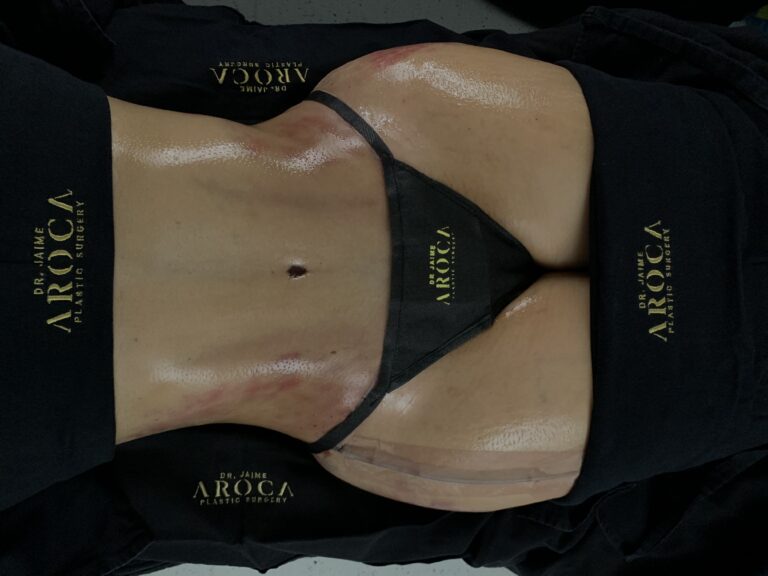
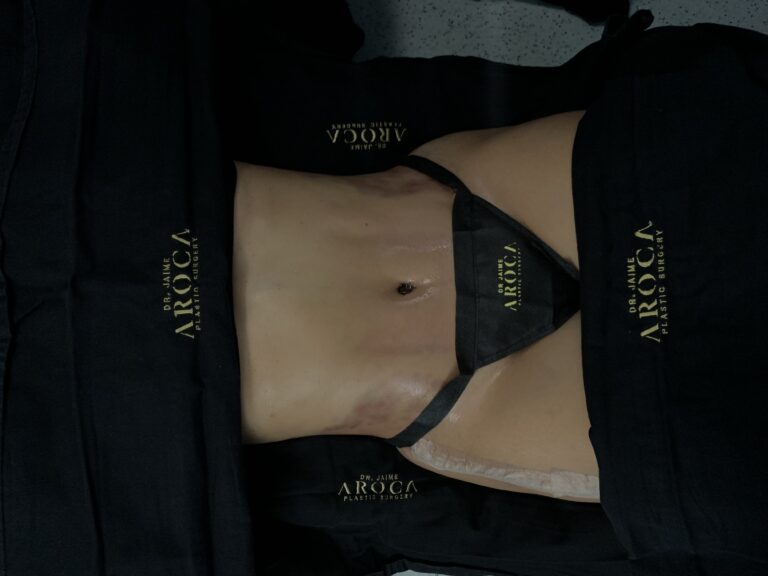
It is a horizontal line that runs across the lower abdomen, just above the pubis. Its length varies depending on how much skin is removed: in some cases it goes from hip to hip, in others it is shorter. At first it is red, somewhat raised, and firm to the touch. Over the following months it flattens, fades, and in most cases ends up as a thin line that can be hidden under your underwear.
Conviene entender por qué una cicatriz nunca llega a tener la textura de la piel original. Cuando la piel se repara, el tejido nuevo se organiza en haces de colágeno orientados en una sola dirección, en lugar de la matriz entrecruzada del colágeno de la piel sana (revisión en Cureus, 2024). Esa diferencia estructural es la razón de que la cicatriz se vea y se sienta distinta, por bien que cicatrices.
What doesn’t exist is a tummy tuck without a scar. Cleveland Clinic states it plainly: there’s no way to avoid it completely, because surgery requires incisions. What can be done is minimize its appearance. When there’s a real excess of skin, as I usually explain: “All that excess will have to be removed out of necessity. Skin-tightening technology won’t fix that, and liposuction won’t fix it either, because that isn’t fat.” The scar is the anatomical consequence of removing that excess tissue.
Where the abdominoplasty scar sits, and why its height changes everything
The scar’s vertical position is what separates a discreet result from a visible one. A scar that sits too high will show above a bikini, underwear, or pants. A low scar, on the other hand, goes unnoticed.
This isn’t a personal aesthetic preference: it’s a technical criterion recognized in the literature. In the original description of the TULUA technique, applied to 42 patients (Aesthetic Plastic Surgery, 2014), low transverse scars generally turned out to be concealable, at an average distance of 6.3 cm (plus or minus 1.4 cm) from the anterior vulvar commissure. And among the complications that this technique specifically aims to avoid are two: a high transverse scar and a navel that sits too low.
The subsequent multicenter study, with 845 patients operated on by 68 plastic surgeons from 10 countries (Plastic and Reconstructive Surgery, 2021), assessed exactly that: the position and proportion of the scar and navel among the outcome parameters, with an average rating of 8.68 out of 10 points.
In other words: where the line ends up is part of the surgical outcome, not a matter of chance.
Why I design the incision before entering the operating room
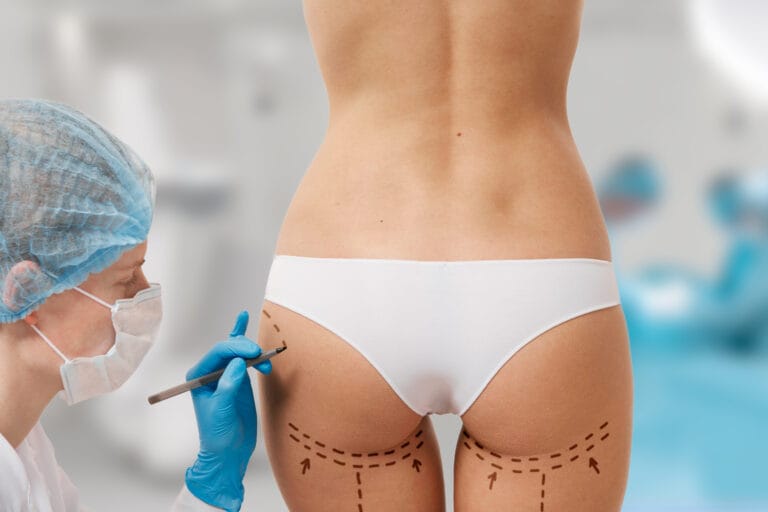
The scar’s final position isn’t improvised in the operating room. It’s defined during preoperative marking, with the patient standing, evaluating the amount of skin, torso length, and the anatomy of each case. That marking is the first surgical decision, and possibly the most decisive one for the aesthetic outcome.
Bring your underwear or swimsuit to the consultation
It’s a simple recommendation that changes the outcome. When the patient brings the underwear she usually wears, I can draw the incision line with reference to what that garment will actually cover. It’s a concrete data point, not an estimate.
That’s the goal I pursue in every case: a very low scar, easily hidden under any bikini or underwear.
Un Proceso Seguro de Inicio a Fin
“Cada cirugía comienza mucho antes del quirófano. Una preparación adecuada y una valoración rigurosa son la base de un resultado exitoso y seguro.”


Lipectomy scar and abdominoplasty scar: are they the same?
Yes. Lipectomy (or dermolipectomy, meaning the resection of skin and fat) is the technical name for the same procedure. If you search for “lipectomy scar” and “abdominoplasty scar,” you’re talking about the same horizontal line. The difference is purely terminological.
Types of abdominoplasty scars by technique
Full tummy tuck
It leaves a horizontal scar that usually extends from hip to hip, plus a circular scar around the navel due to its repositioning. The length depends on how much excess skin there is, not on the patient’s weight. In consultations I’ve seen many slim patients, with multiple pregnancies, whose excess skin was considerable: “Your problem isn’t fat: it’s that you can’t have a flat abdomen no matter how much you exercise, because you have a weakened abdominal wall.”
Mini tummy tuck
The incision is shorter and lower. It doesn’t always require repositioning the navel, so it may not leave a navel scar. It’s indicated when the excess skin is concentrated below the navel.
In patients with major weight loss, the excess skin can be so extensive that, in addition to the horizontal line, a vertical component (in an inverted-T shape) is needed. That increases the scarring, but it’s the only way to remove the excess tissue in these cases. Each body dictates the technique, not the other way around.
The navel scar in abdominoplasty
The navel is the surgeon’s signature. Its shape, its position, its natural look: everything reveals the technique used. A poorly positioned navel screams surgery; a well-done one goes completely unnoticed. A comparative analysis of 49 patients operated on between 2020 and 2025 (JPRAS, 2026) starts from that same premise: the aesthetic outcome of abdominoplasty is largely defined by the navel’s appearance, and it evaluates shape, size, depth, natural look, and the quality of the periumbilical scar. I’ve dedicated a full article to this topic: how the navel is reconstructed and how to care for it.
Why the tension at closure decides your scar’s final width
This is a point that’s rarely explained and that I consider fundamental. The scar’s final width isn’t decided by skill with a needle. It’s decided by tension.
When the wound is closed under a lot of tension, the skin edges end up pulled in opposite directions. Over time, that force tends to widen the scar. That’s why muscle plication (the suture that joins the rectus abdominis muscles when they’re separated, known as diastasis repair) is key: by tightening the deep wall, the superficial closure bears less force.
An animal-model study, conducted in rats (Aesthetic Plastic Surgery, 2022), found that transverse plication produced less tension at closure, which caused the horizontal scar to stay lower and show less widening. It’s preclinical evidence, not a patient trial, but it nicely illustrates the principle I look for in the operating room: that the skin should close without excessive force.
How the Tummy Tuck Scar Heals Month by Month
Recovery from a tummy tuck is a long process, and the scar heals at its own pace.
First two weeks: It’s not a scar yet
It is a wound that is in the process of healing. It is red, tender, and may have visible stitches. The priority here is to avoid putting strain on the area.
Months 1 through 3: the phase when it seems to get worse
The scar may appear redder, thicker, or firmer than it did in the first few weeks. This is normal. It corresponds to the inflammatory phase and the early stage of collagen remodeling. Many patients get alarmed at this point, but this is precisely when they need to continue their skincare routine rather than stop it.
Months 3 through 6: Remodeling begins
The line begins to fade and lose its reddish hue. The swelling gradually subsides.
From Month 6 to Month 12 and Beyond: Maturation, Fading, and Permanent Scarring
As I usually say, the final results are best appreciated after three to six months, once the swelling has completely subsided and the tissues have settled into their new position. The scar, however, lags behind: it may continue to improve for up to 12 to 18 months. Don’t judge its final appearance before that time.
What Factors Determine the Final Appearance of Your Scar?
There isn’t just one factor, but rather several that interact:
- Surgical technique and tension during closure (as I explained above).
- Genetics and healing type: Some people produce more collagen than necessary.
- Sun exposure: The sun can cause the scar to darken for an extended period of time.
- Postoperative care: silicone, compression garment, sunscreen.
- Tobacco: It affects microcirculation and slows down healing.
- Stable weight: Significant weight changes can alter the appearance of the scar.
Of all of them, the first two are beyond your control. The remaining four are within your control, and that’s where you should focus your efforts.
A study using the BODY-Q questionnaire in 38 patients (Plastic and Reconstructive Surgery Global Open, 2025) found that scar quality as assessed by the patients themselves was one of three predictors of improved overall satisfaction (p = 0.003), along with concurrent liposuction and preoperative body mass index. The scar is not a minor cosmetic detail: it is a measurable determinant of the outcome.
Tummy Tuck Scars on Dark and Olive-Toned Skin
In skin with higher melanin content, post-inflammatory hyperpigmentation (the darkening of the skin in areas that have been inflamed) tends to be more noticeable. This doesn’t mean the scar will look bad, but it does mean that sun protection becomes even more important.
There is a second point, one that is less well known and that I discuss on a case-by-case basis. A narrative review published in *Cureus* (2026), which covered the literature from 2000 through November 2025, warns that the adverse pigmentary effects of various scar treatments are clinically significant in darker skin tones. This applies, for example, to intralesional corticosteroids and certain lasers. In the Colombian Caribbean, this isn’t just a theoretical nuance—it’s part of the conversation I have with most of my patients.
Skincare Practices That Do Affect the Appearance of a Scar
Silicone gel or sheets
This is the treatment with the most consistent evidence. The Cureus review (2026) notes that the evidence most consistently supports early, low-risk modulation using silicone gel or sheets to prevent and treat hypertrophic scars at an early stage. A systematic review that followed the PRISMA methodology and analyzed 30 randomized controlled trials published between 1991 and 2022 (Dermatology Online Journal, 2023) found that most studies reported improvement in at least one scar characteristic with silicone-based products. The authors themselves caution that many of these studies had small sample sizes and short follow-up periods, so the correct interpretation is “a reasonable, low-risk first-line option,” not a “guaranteed solution.”
Silicone works by providing moisture and creating an occlusive barrier: it maintains a favorable microenvironment over the scar. When to start using it depends on the condition of the wound, and this is something I discuss during follow-up visits.
Strict sun protection
My advice is straightforward: avoid exposing your scars to the sun, as this can affect their appearance.
During the first 12 months, apply broad-spectrum sunscreen to the scar whenever the area is exposed to the sun, along with a physical barrier whenever possible. In a city like Barranquilla, with intense sun year-round, this is probably the aspect of care that most patients underestimate.
Belly band, massage, and blood pressure monitoring
The compression garment serves several purposes: it reduces swelling, provides support to the tissues, and limits tension on the scar. Postoperative massages can also help manage the superficial fibrosis that forms around the incision line.
Added to this is the most basic—and most often overlooked—point: do not strain your abdomen. It is very important to avoid sudden movements, lifting heavy objects, or any activity that puts strain on the abdominal area during the first few weeks, to allow for proper healing.
Hardness and Fibrosis Around the Scar: What They Are and How Long They Last
When you run your fingers over the scarred area, it’s common to feel cords or hardened areas under the skin. That’s post-surgical fibrosis: deposits of collagen that the body produces as part of the healing process. It’s not the scar itself, but rather deep tissue undergoing remodeling. It usually softens between the third and sixth month with lymphatic drainage massage, pressure therapy, or ultrasound, depending on the case.
Numbness around the tummy tuck scar
“Is it normal that I can’t feel the skin around the scar?” This is one of the most frequently asked questions during follow-up visits. Yes, it’s normal.
A prospective study of 60 patients (mean age 42.7 years, 93.3% women) assessed skin sensitivity following lipoabdominoplasty (Aesthetic Plastic Surgery, 2026). At one month, 93.3% of the patients exhibited altered sensitivity, which was most pronounced in the mid-infr umbilical and suprapubic regions—that is, just above the scar. Recovery was gradual: the deficit persisted in 72.5% of patients at 3 months, in 55% at 6 months, and in 21.7% at 12 months.
To put it in terms that matter in a clinical setting: sensitivity usually returns, but it does so slowly.
Keloid and hypertrophic scar following a tummy tuck
Hypertrophic scars are those that thicken and become raised but remain within the boundaries of the original incision. Keloids, on the other hand, grow beyond those edges and can cause pruritus (itching), pain, and a reduced quality of life. Both are fibroproliferative scars: they produce excess collagen.
For early hypertrophic scars, silicone remains the first-line treatment. For established scars, the review in *Cureus* (2026) suggests intralesional triamcinolone (a corticosteroid injected directly into the scar) combined with 5-fluorouracil as a practical pharmacological approach, offering more reliable flattening than corticosteroids alone. Adjuvant therapies are chosen based on the predominant characteristic: cryotherapy for thin lesions, fractional CO₂ laser for thickness and texture, and botulinum toxin A when tension or itching is the dominant symptom.
None of these options are chosen at random. They are selected based on the condition of your scar and your skin type.
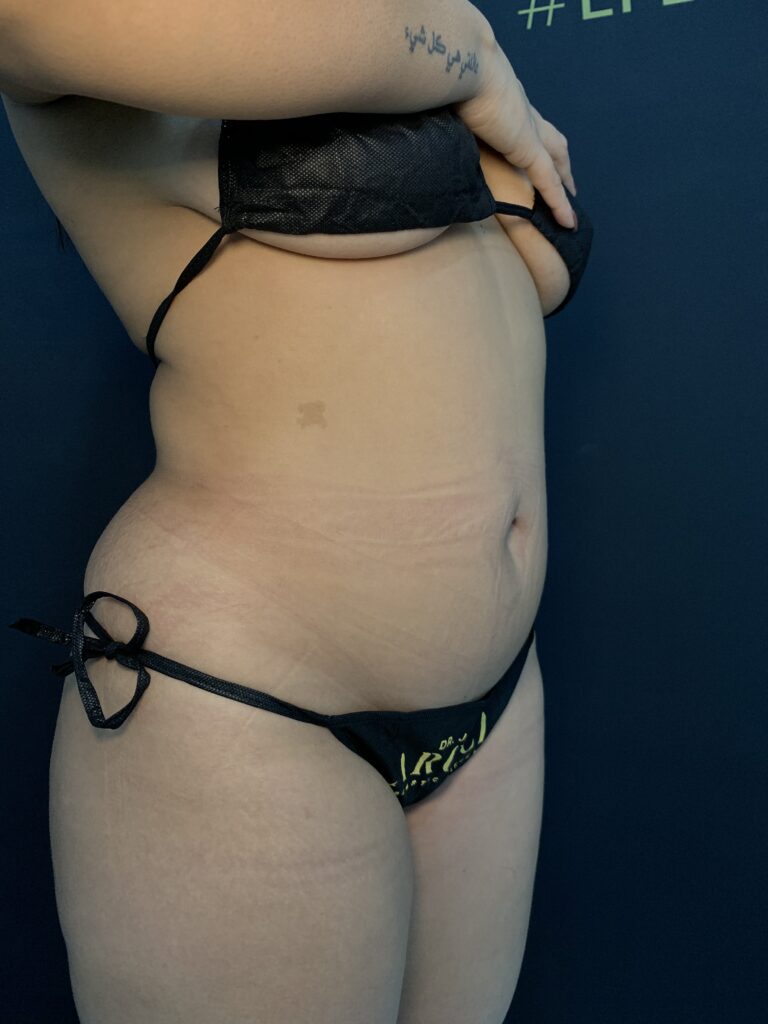
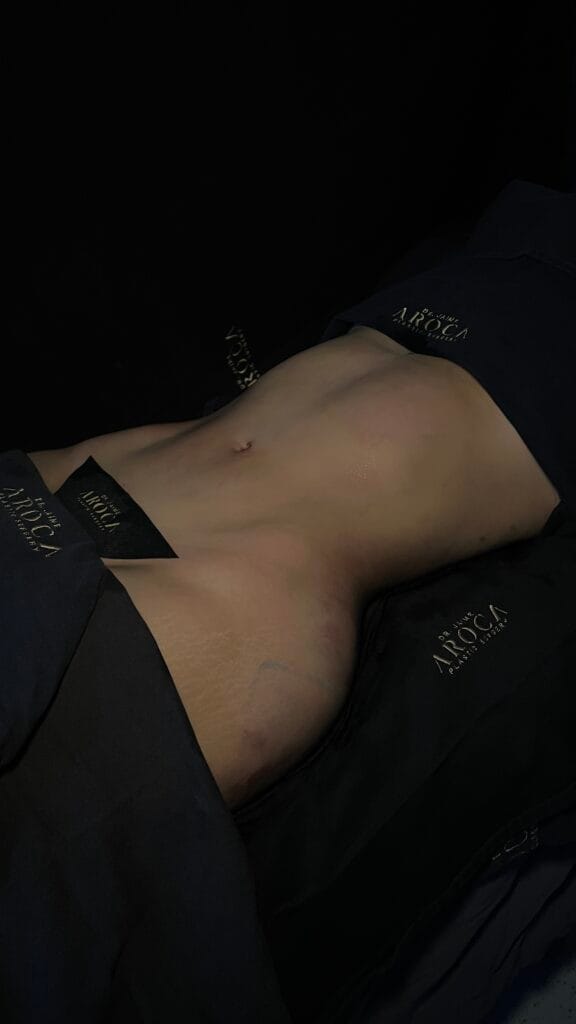
Photos of Tummy Tuck Scars: How to Interpret Them Without Being Misled
Before comparing your scar to a photo on the internet, ask yourself which month that image corresponds to. A scar at 3 months looks very different from the same scar at 12 months.
Also pay attention to the lighting, because direct and side lighting exaggerates contours and colors. Consider the patient’s position, since the line looks different when she’s standing versus lying down. And check to see if any underwear is visible, as that’s the only way to determine the actual height of the scar relative to what that person wears on a daily basis.
Without that information, a photo can raise false hopes or cause unnecessary alarm. That’s why, when a patient shows me a picture during a consultation, the first thing I ask isn’t what she thinks of it, but when it was taken.
¿Vienes del Exterior? Te Acompañamos en Todo
Ofrecemos paquetes de turismo médico con acompañamiento completo: consulta virtual, cirugía en clínica certificada y seguimiento a distancia después de tu regreso a casa.
When Can a Tummy Tuck Scar Be Corrected or Revised?
Scar revision is considered once the scar has fully matured, generally after 12 months. Before that time, the scar is still remodeling and may improve on its own. Options range from nonsurgical treatments (silicone, injections, laser) to surgical excision of the scar with closure using a technique that minimizes tension.
Signs That Your Scar Needs Medical Evaluation
Seek medical attention if you notice redness that worsens rather than improves, discharge with an unusual odor or color, progressive pain, marked thickening after 6 months, intense and constant itching, or the wound opening up. These signs do not always indicate a serious complication, but they do require evaluation.
My Approach to Scarring in Abdominoplasty and ArTummyTech
In my tummy tucks, or ArTummyTech procedures, I address every anatomical detail: I don’t just remove excess tissue; I restore the abdomen’s natural harmony. ArTummyTech is an advanced tummy tuck technique that, in addition to flattening the abdomen, defines the abdominal muscles and reduces the waistline through an incision that is easily concealed.
I want to be clear about one thing: it’s not magic—it’s anatomy applied with precision. When I perform this procedure, I don’t just remove skin and fat; I also restore the body’s center of gravity. The scar is an integral part of that plan from the very beginning, not collateral damage that’s addressed later.
That’s why my postoperative instructions focus on both the appearance of the abdomen and the incision line. I recommend complete rest for the first 10 days, with light walks around the house. After the third week, you can resume light activities, and for more intense exercise, it’s best to wait at least 6 weeks. Throughout this time: stay well-hydrated, follow a balanced diet, and avoid exposing the scars to the sun.
The American Society of Plastic Surgeons describes abdominoplasty as a procedure that removes excess skin and fat from the abdomen and, in most cases, restores weakened or separated muscles. That muscle tissue—which many patients are unaware of—is what makes it possible to close the incision with less tension.
Frequently Asked Questions About Tummy Tuck Scars
We address the most common questions from our patients to help you make an informed and safe decision.
Conclusion: Your scar is part of the result, not collateral damage.
A tummy tuck scar isn’t something you’re “stuck with” despite the surgery. It’s part of the plan. Its location, width, and healing process depend on technical decisions and specific aftercare, and there is room for adjustment on both fronts.
Every body has its own story. The only way to know what your scar will look like is through an in-person evaluation where we assess your skin, your anatomy, and your expectations. If you’re considering this step, schedule your consultation, and let’s address your questions thoughtfully and without rushing.